
When I started my travels (albeit at the age of 50) I found myself drawn to ancient places. So, I put Stonehenge on my list as a must-see ancient site to visit when I first travelled to England. Unfortunately, when I arrived several busloads of American tourists shattered any atmosphere there may have been lingering between the stones. Now I’ve got nothing against tourists as I am one myself, but this lot were loud and inconsiderately took over the whole site.
When I returned to England to live I decided visit Stonehenge again and since it was winter, there were very few people around. I soaked in the atmosphere, imagining scenes from thousands of years in the past.
Since then I’ve made a conscious effort to search out many more ancient sites and one which caught my attention early in my travels was the Callanish (Calanais is the Gaelic Spelling) Stones on the Isle of Lewis in the Outer Hebrides of Scotland.
I’ve had the privilege of visiting Scotland on five occasions, and in 2002 while staying in Ullapool as part of a two-week holiday, I experienced an extreme desire to visit Lewis and see the Stones.
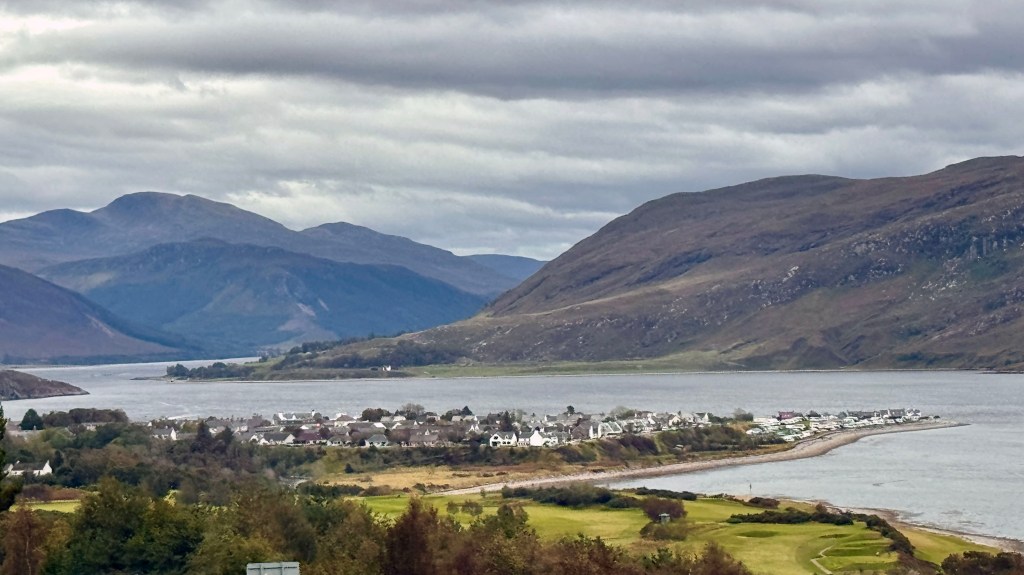
However, due to time constraints, I was only able to observe the distant mountains over the body of water separating the island from the mainland. I decided there and then that I must return and complete my journey.
Over the intervening years Lewis and the Callanish Stones called to me. Like so many others, somewhere way back in my ancestry I have Scottish DNA so maybe it wasn’t all imagination, but even if it was I just knew I had to go there.
In November 2024, I realized that if I didn’t embark on this adventure soon, I might miss the opportunity forever. At 74, the prospect of a long-haul flight was challenging, but I was determined to embrace it. I cheerfully told one of my friends, “I’m heading to Scotland, to the Isle of Lewis. You’re more than welcome to join me, but if not, I’ll go alone!” Naturally, she accepted the invitation and we spent the next 12 months excitedly planning for the journey ahead.
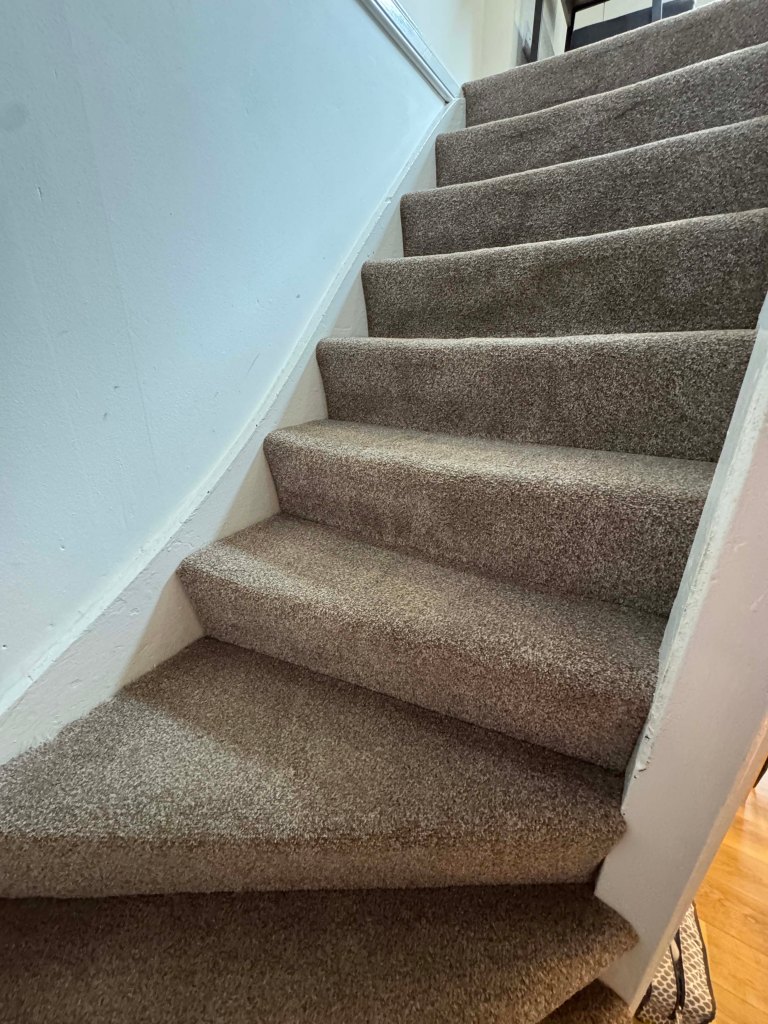
Accommodation in the Outer Hebrides is at a premium with one cottage at the ‘premium’ price of over $5000 for the 4 nights of our visit. My usual mode of travel definitely isn’t premium! But over the following months we managed to secure an apartment in Stornoway to suit our budget. Although it was in a great, central location, the three flights of stairs from the front door to the bedroom made it a bit challenging, but I guess that’s part of the adventure of travel, and the view from our attic bedroom window was good if zoomed in somewhat.
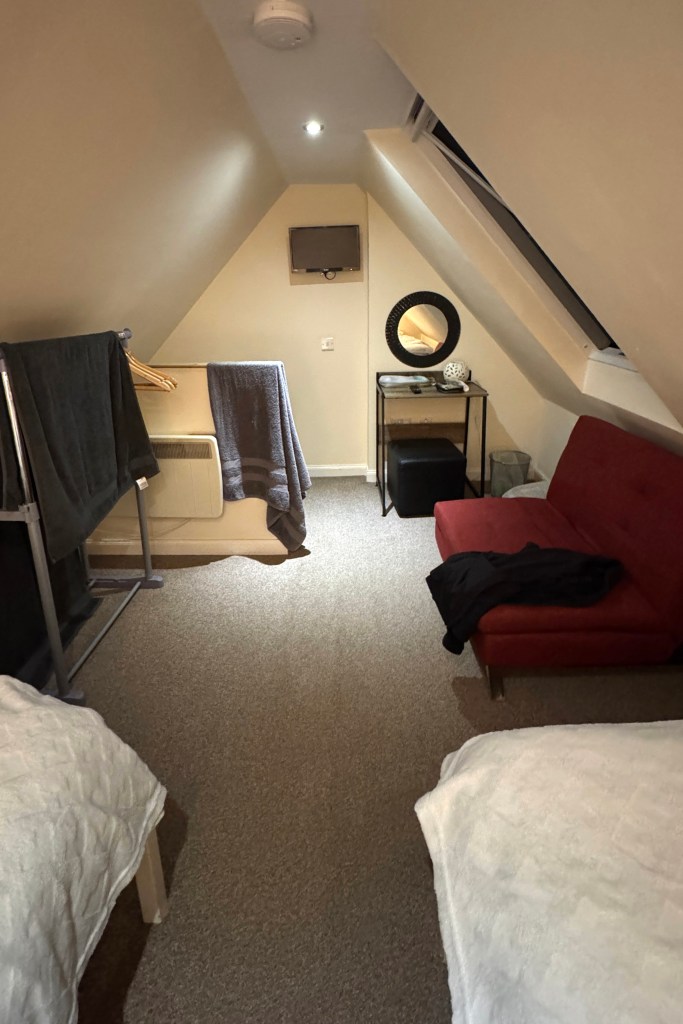
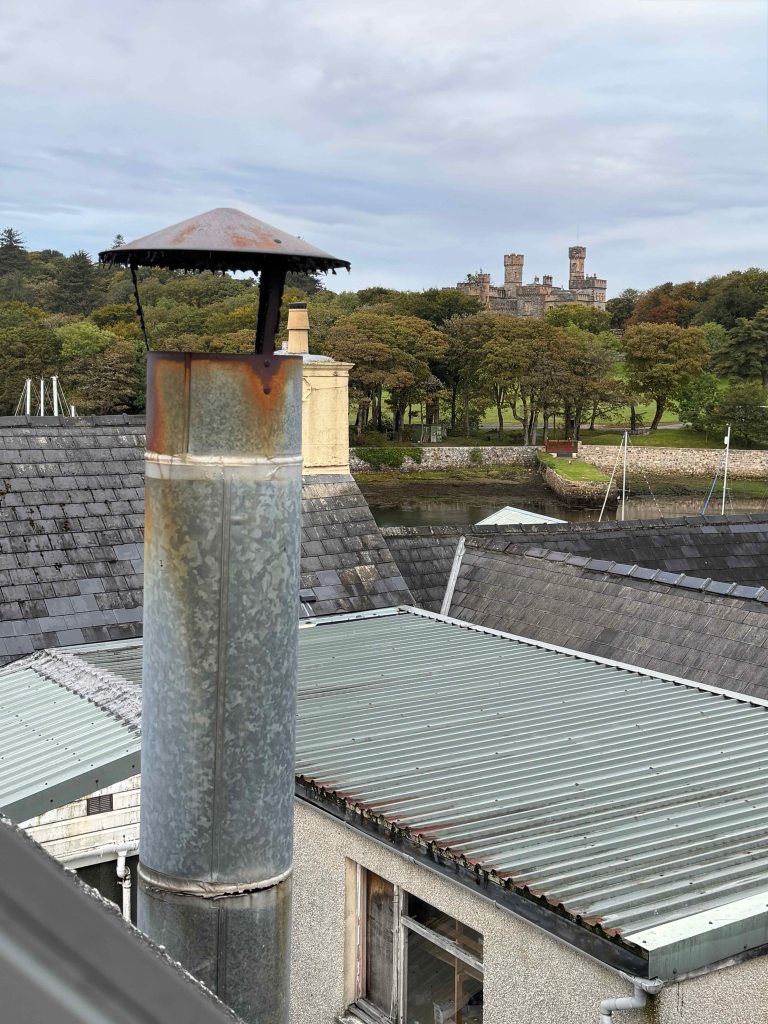
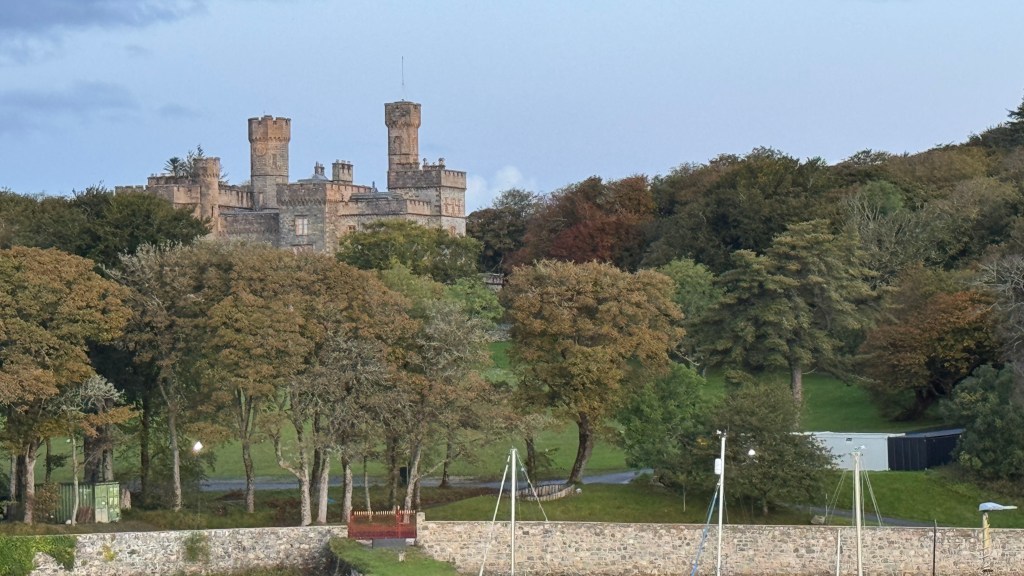
But I’m jumping ahead with the photos and must go back to the beginning of my Callanish experience.
Before we knew it September 2025 had arrived and we boarded our flight from Brisbane to London.
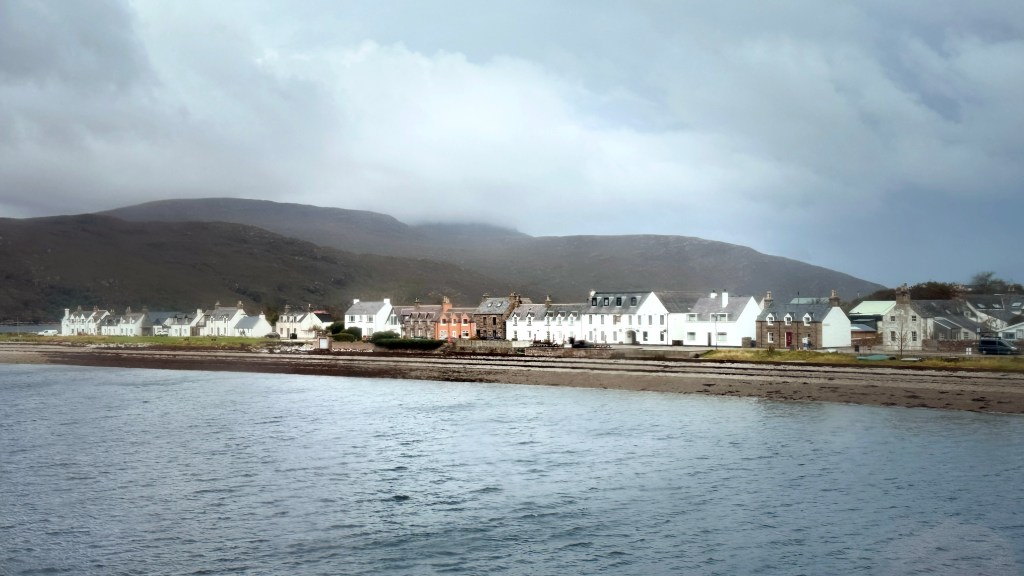
A few days later we arrived in Ullapool. A few more days later we were leaving Ullapool on the ferry which was to take us across The Minch, the unpredictable stretch of water between the mainland and the Isle of Lewis.
Thankfully on the day we left unpredictable wasn’t part of the equation; although the day was dull, the ocean behaved. At last, my dream was coming true.
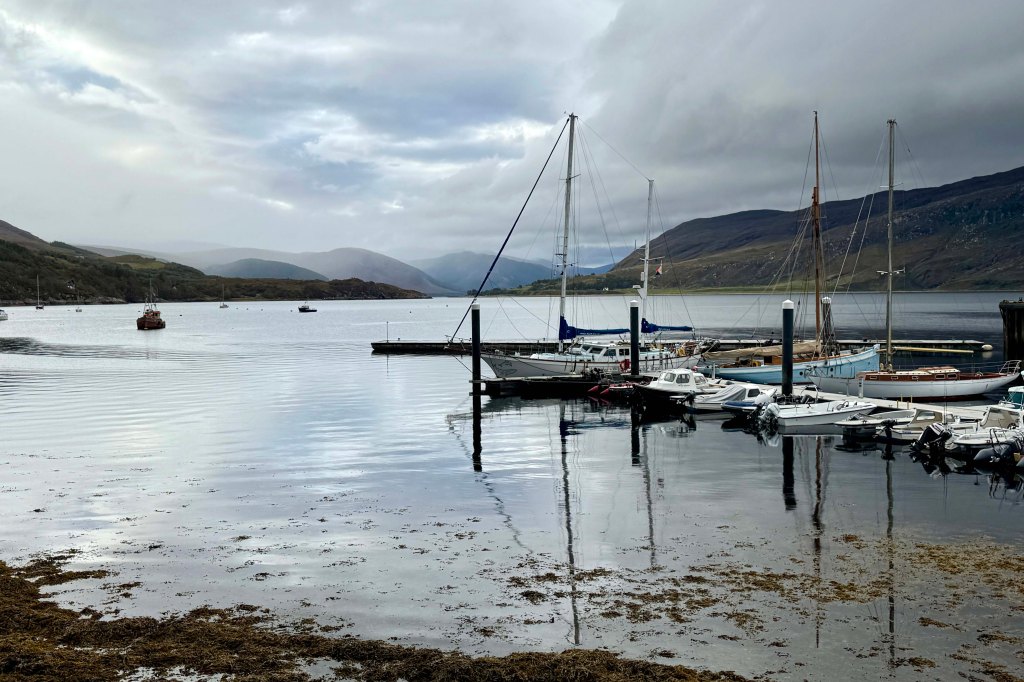
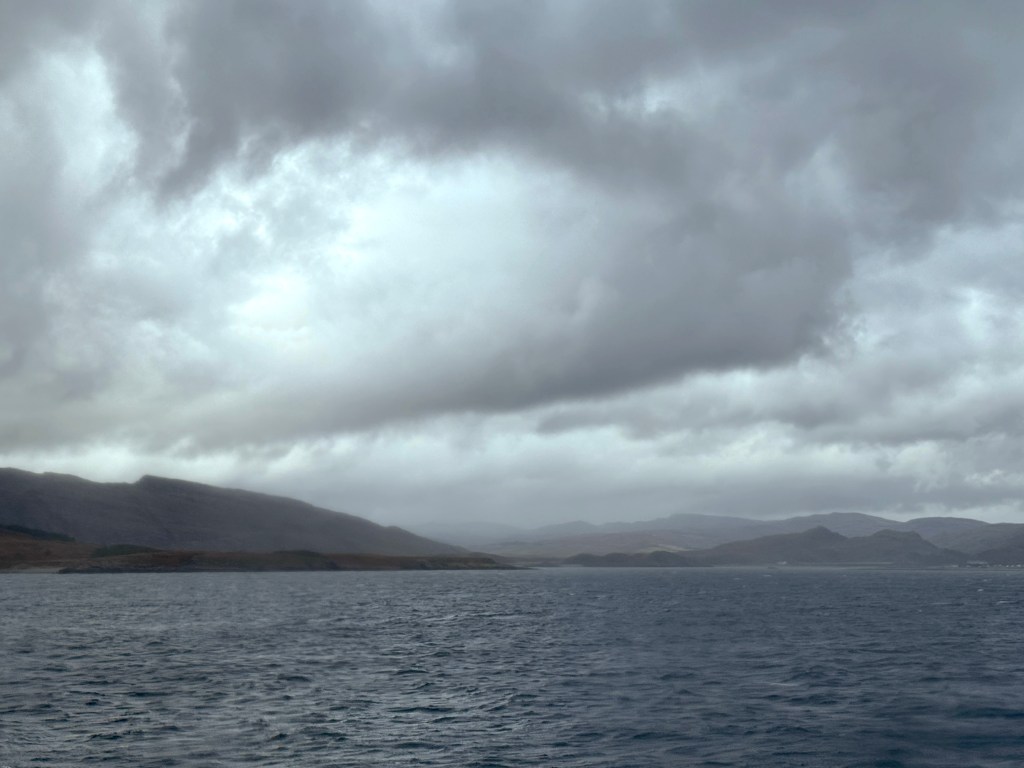
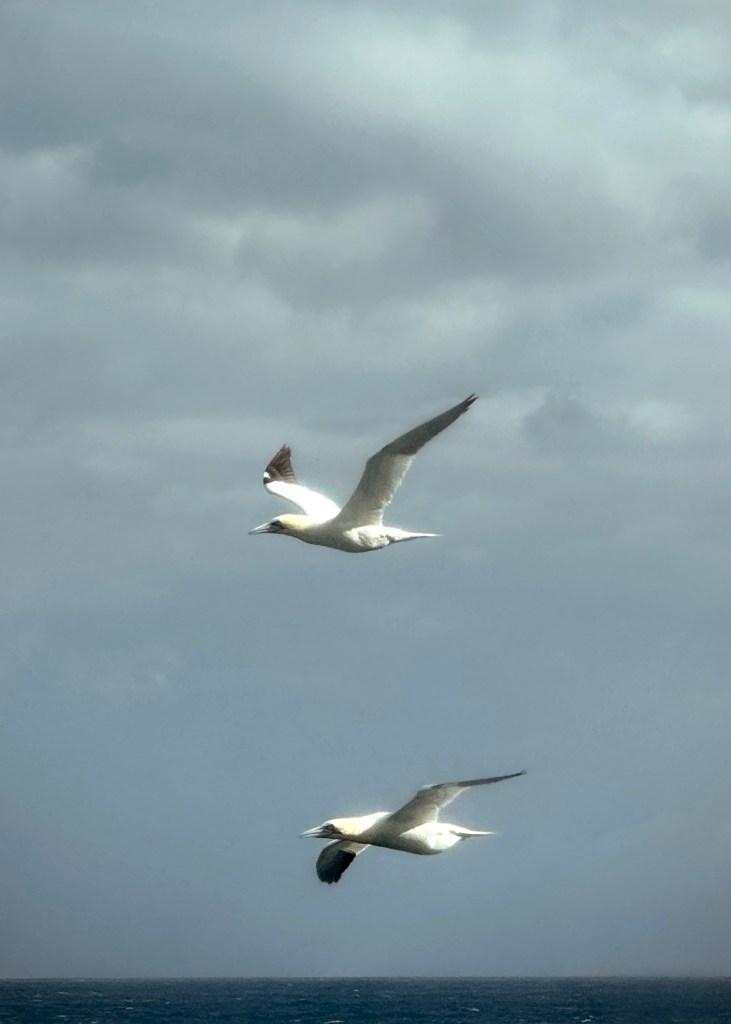
I’m actually skipping forward a few days now as we didn’t make it to the Callanish Stones until our third day on Lewis and Harris and telling the full Isle of Lewis and Harris story is too long for one post.
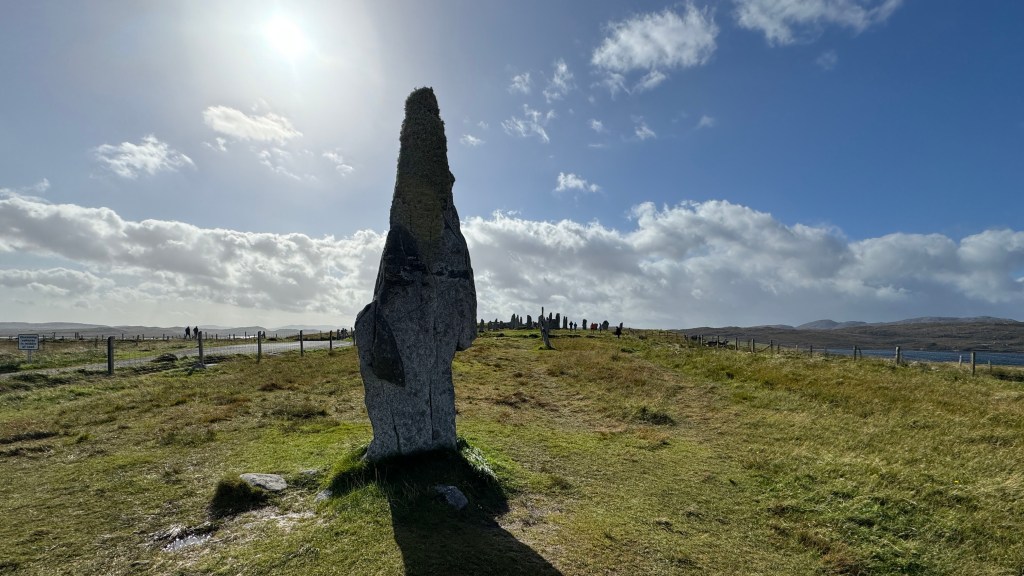
The weather on the day was great, but very windy – enough to take your breath away. I was holding my breath anyway as I was walking up the steep lane towards my dream! Gradually they came into view, I took a quick breath to stop myself from falling unconscious onto the path then continued onwards and upwards.
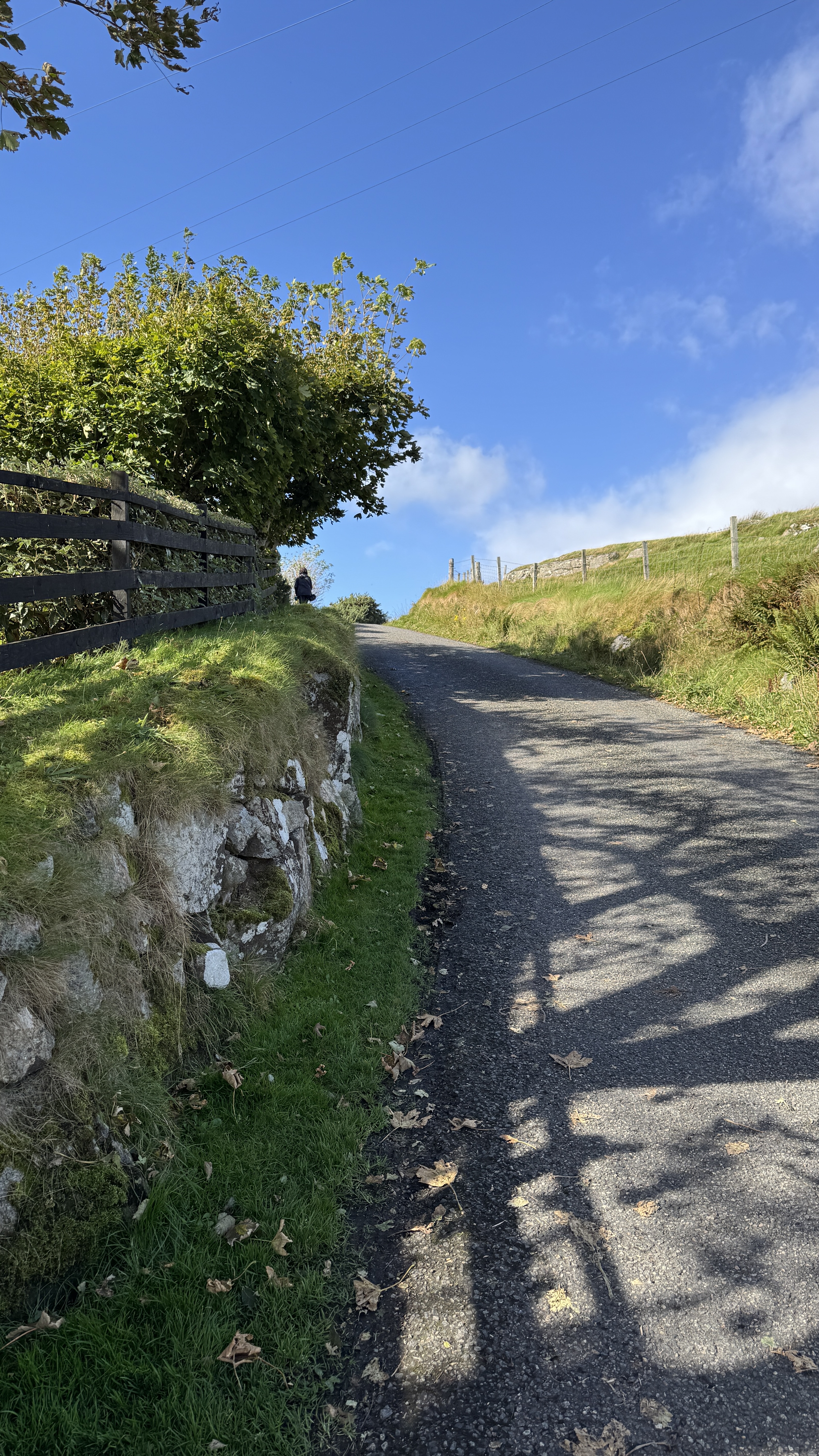
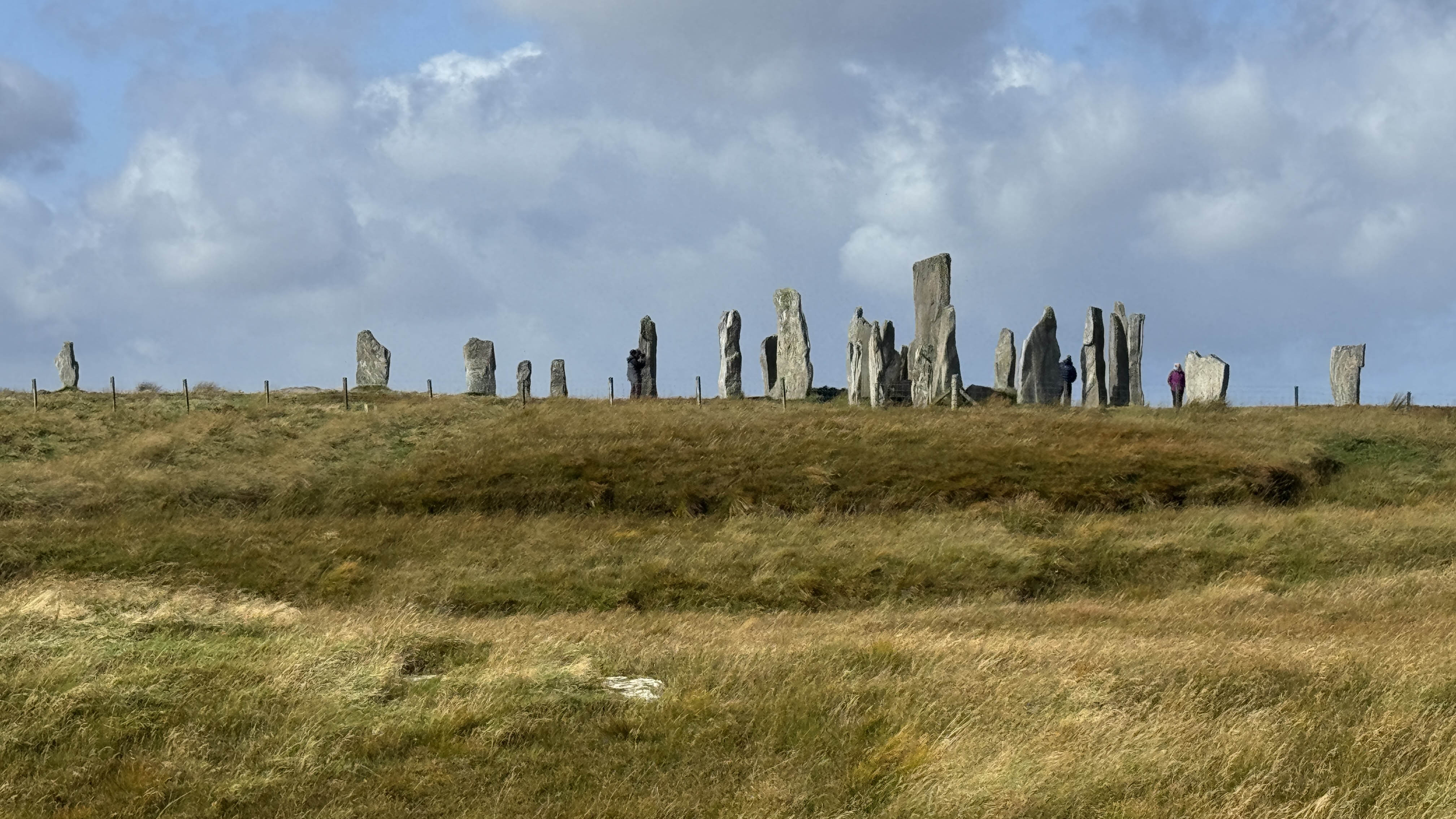
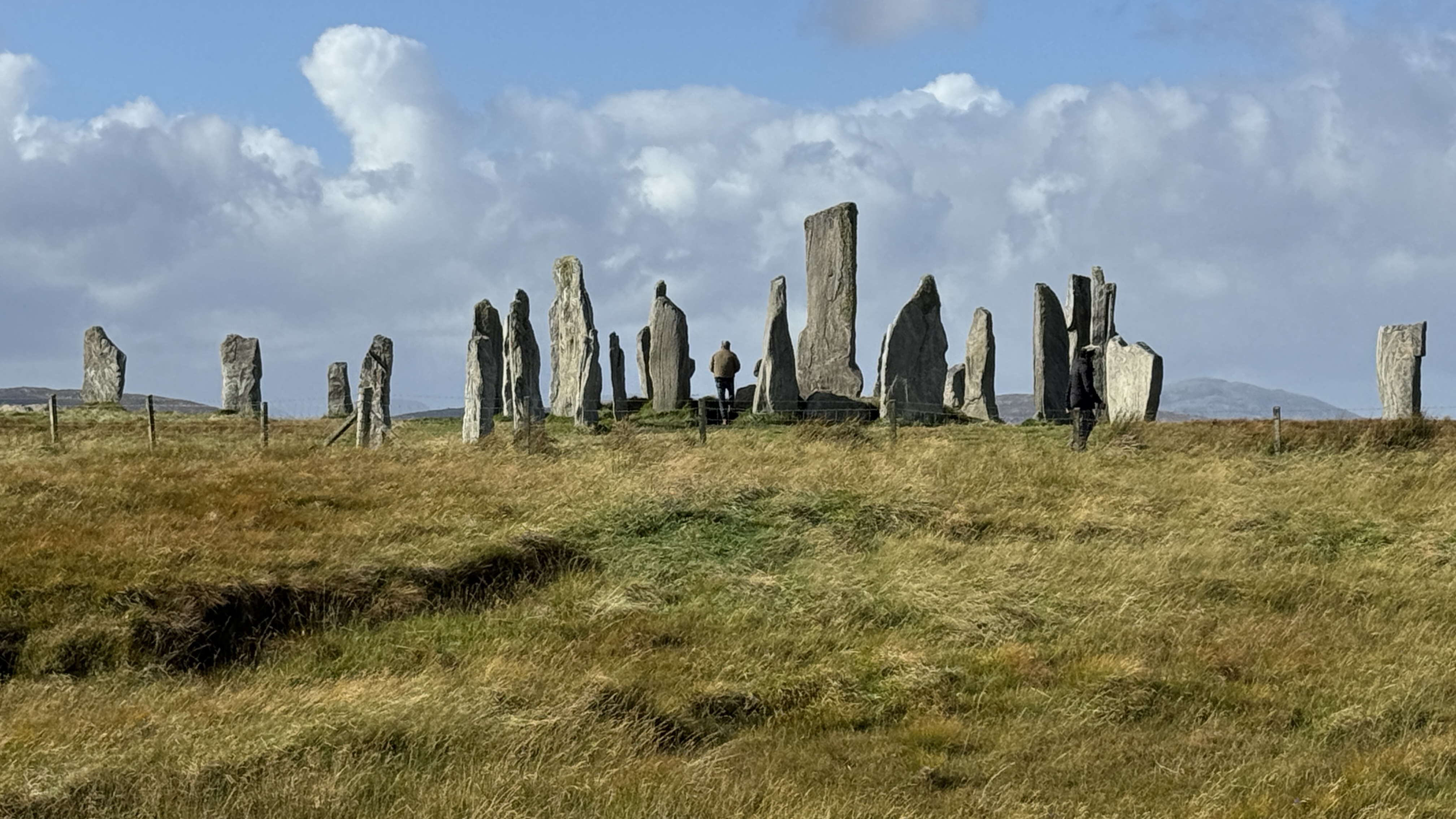
It was as though they belonged as much to the sky as to the land.
I still have no idea why I felt so emotional, but I definitely felt a lump in my throat as we drew near and was very grateful that my travelling companion was silent as talking would have spoilt the moment for me.
I’ve been an ‘Outlander’ fan for years but didn’t feel any inclination touch the stones and pretend I was going to be whisked back to the 18th Century like others who visited, what I felt was deeper than that. At one point I did mention to Jill that I was happy now and didn’t care what we did for the rest of the holiday to which she took a slight umbrage. I guess what I was trying to say in a very untactful way was that the urgent pressure I’d felt to visit one particular site was now relieved.
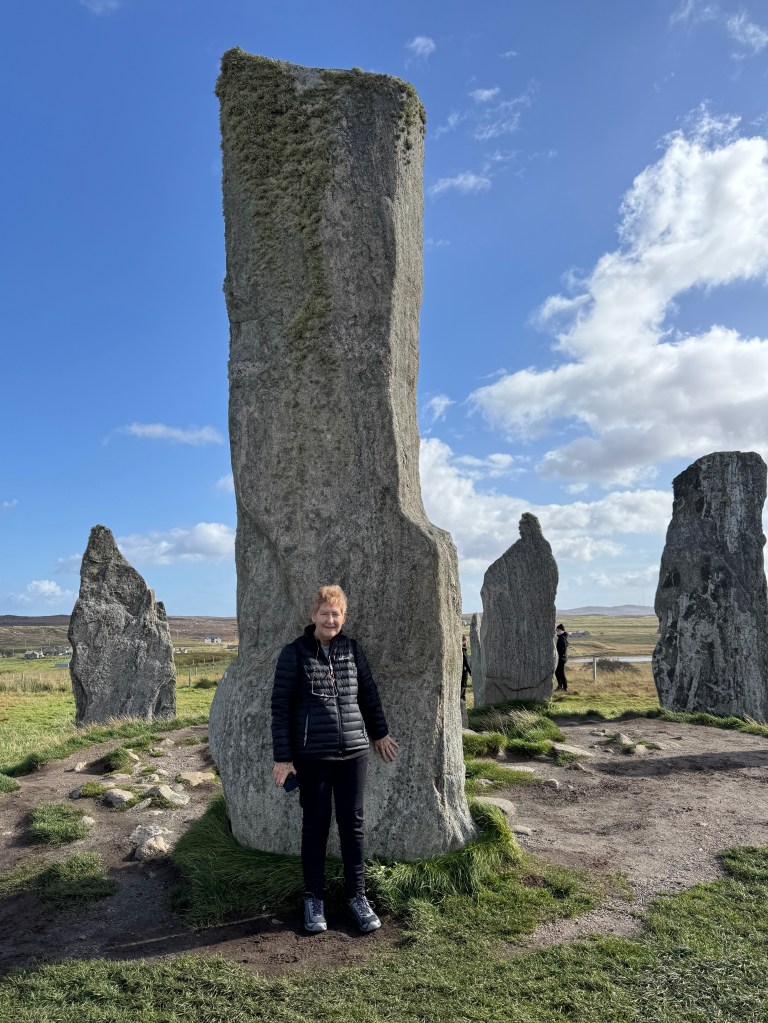
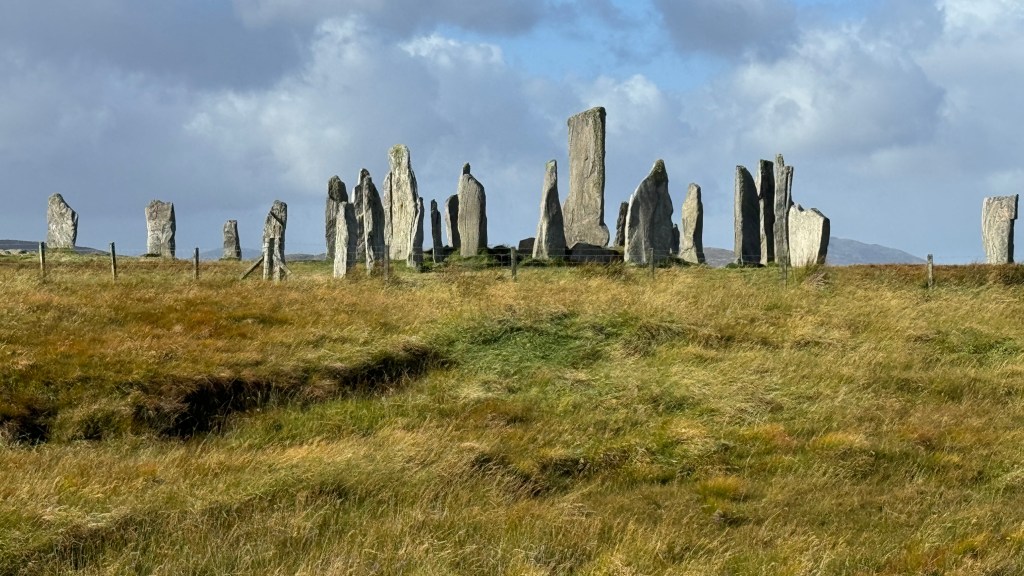
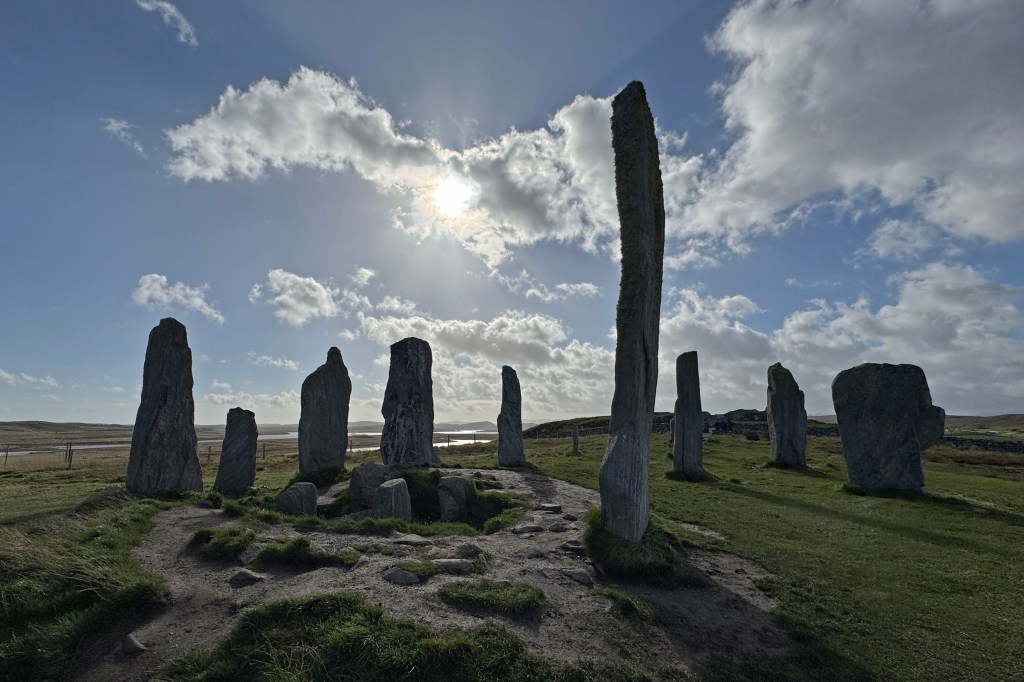
As I wandered around the stones I could actually feel a great sense of peace, after 20 years I’d actually made it. I studied the large grey shapes. Rising from the sweeping moorland the stones form a cruciform circle with a central ring of tall, slender monoliths. At the centre stands a single, great monolith. It is not carved or decorated. It’s very presence is powerful and needs no embellishment.
From the centre of the circle four distinct stone avenues radiate to the north, south, east and west giving the circle its cruciform shape. The carefully arranged lines of tall standing stones guide the eye, and the body towards the heart of the circle where a small chambered burial cairn once held cremated remains of people who lived between 2000 and 1700 BC.
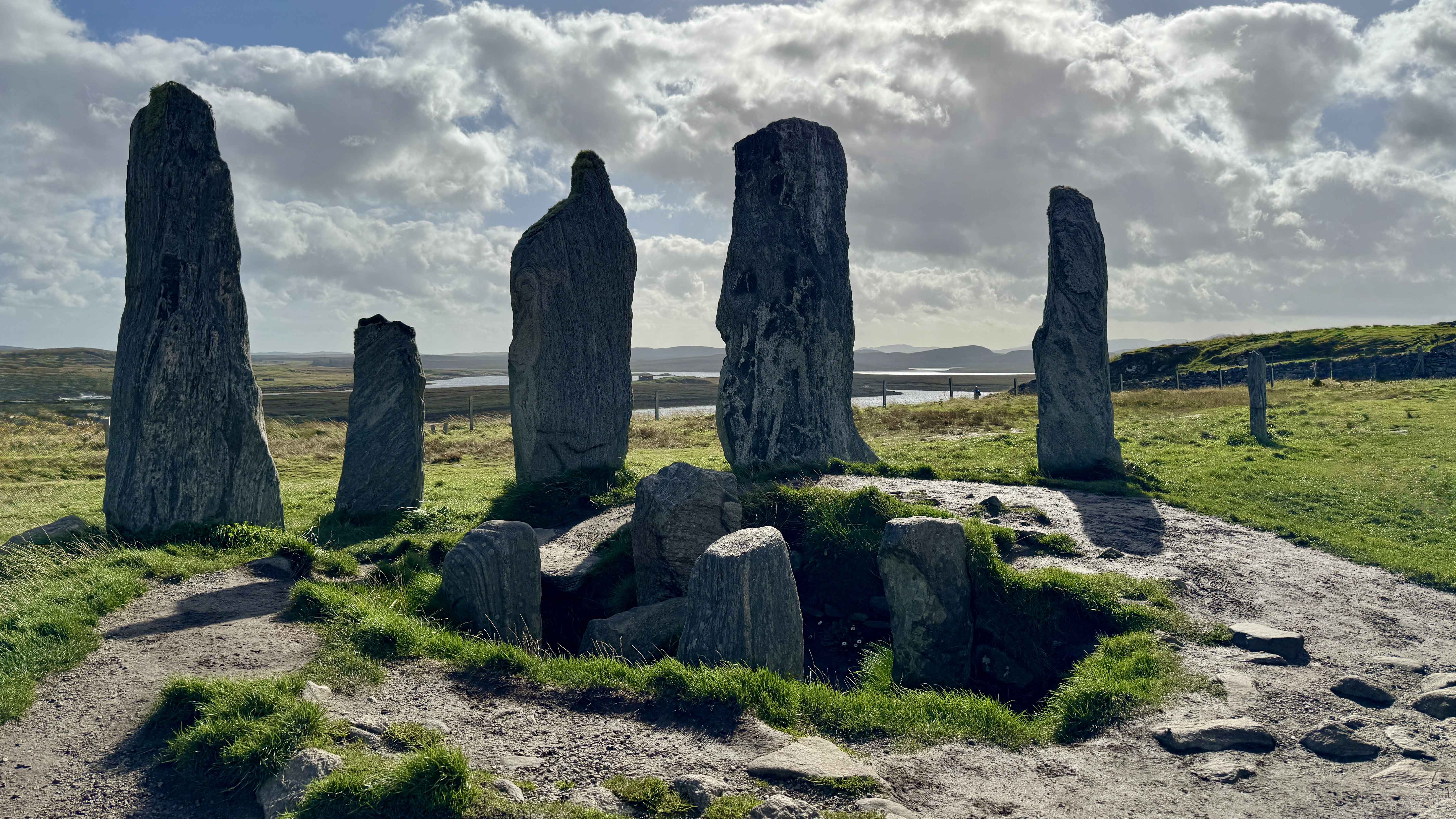
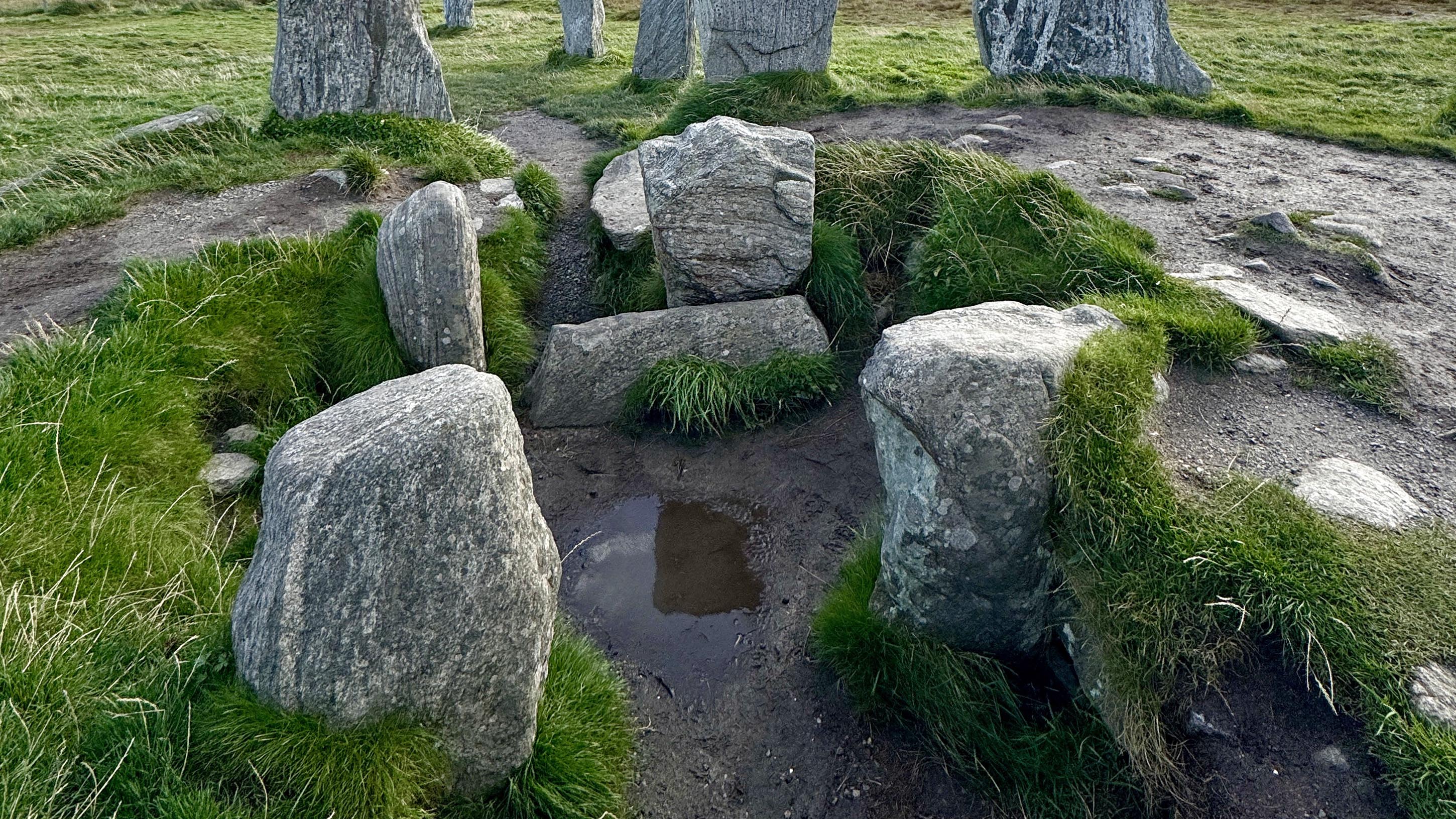
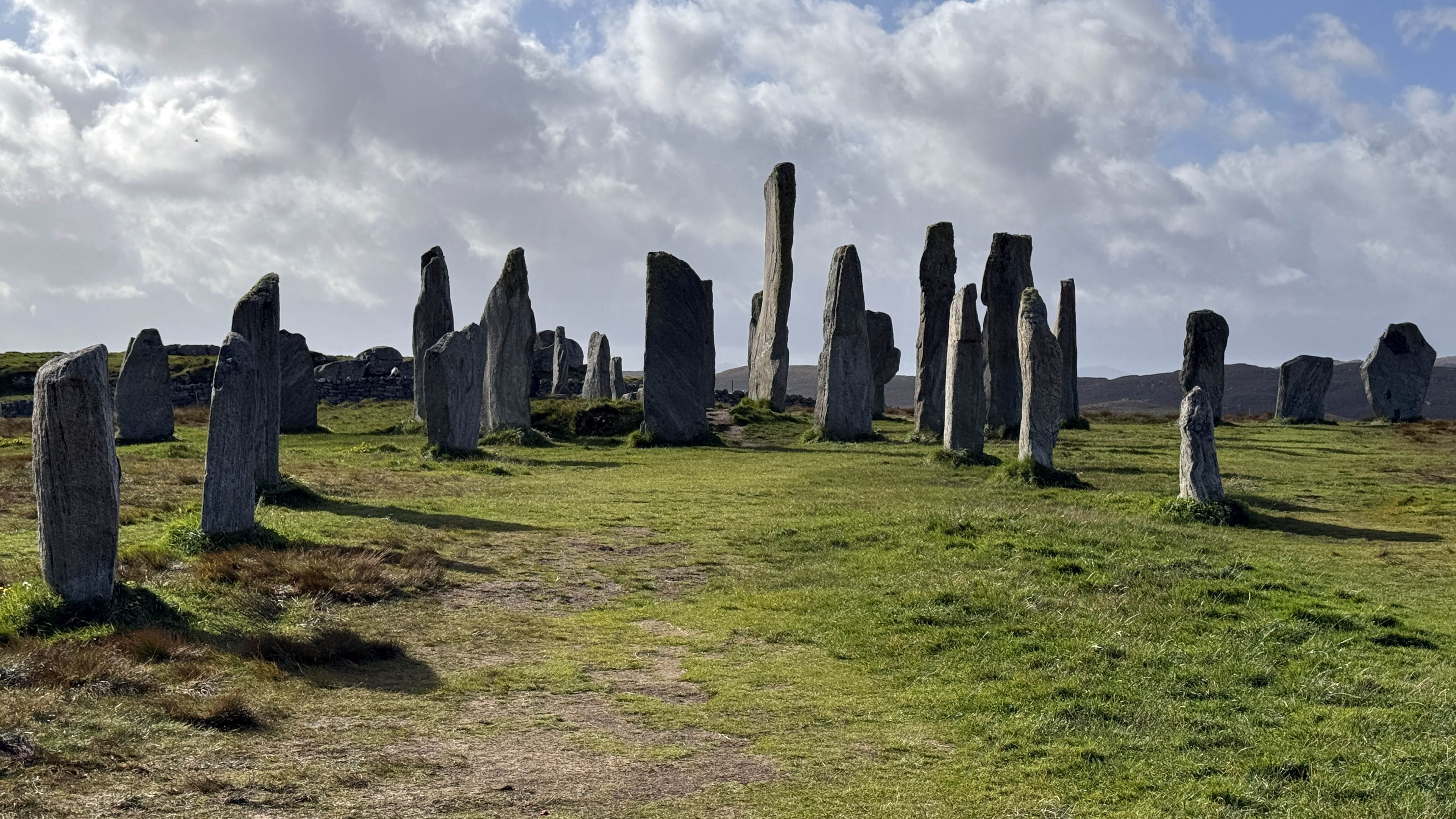
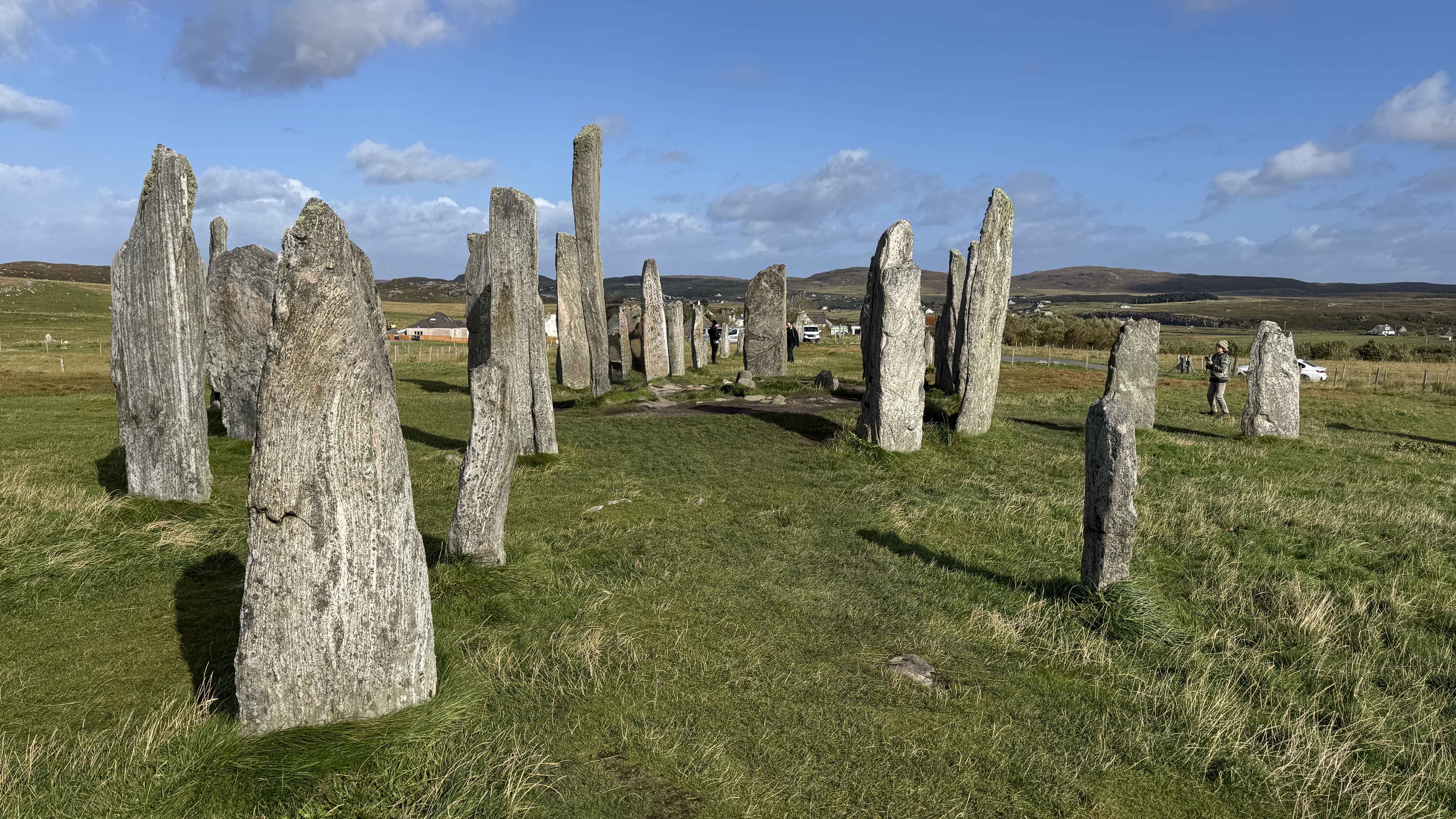
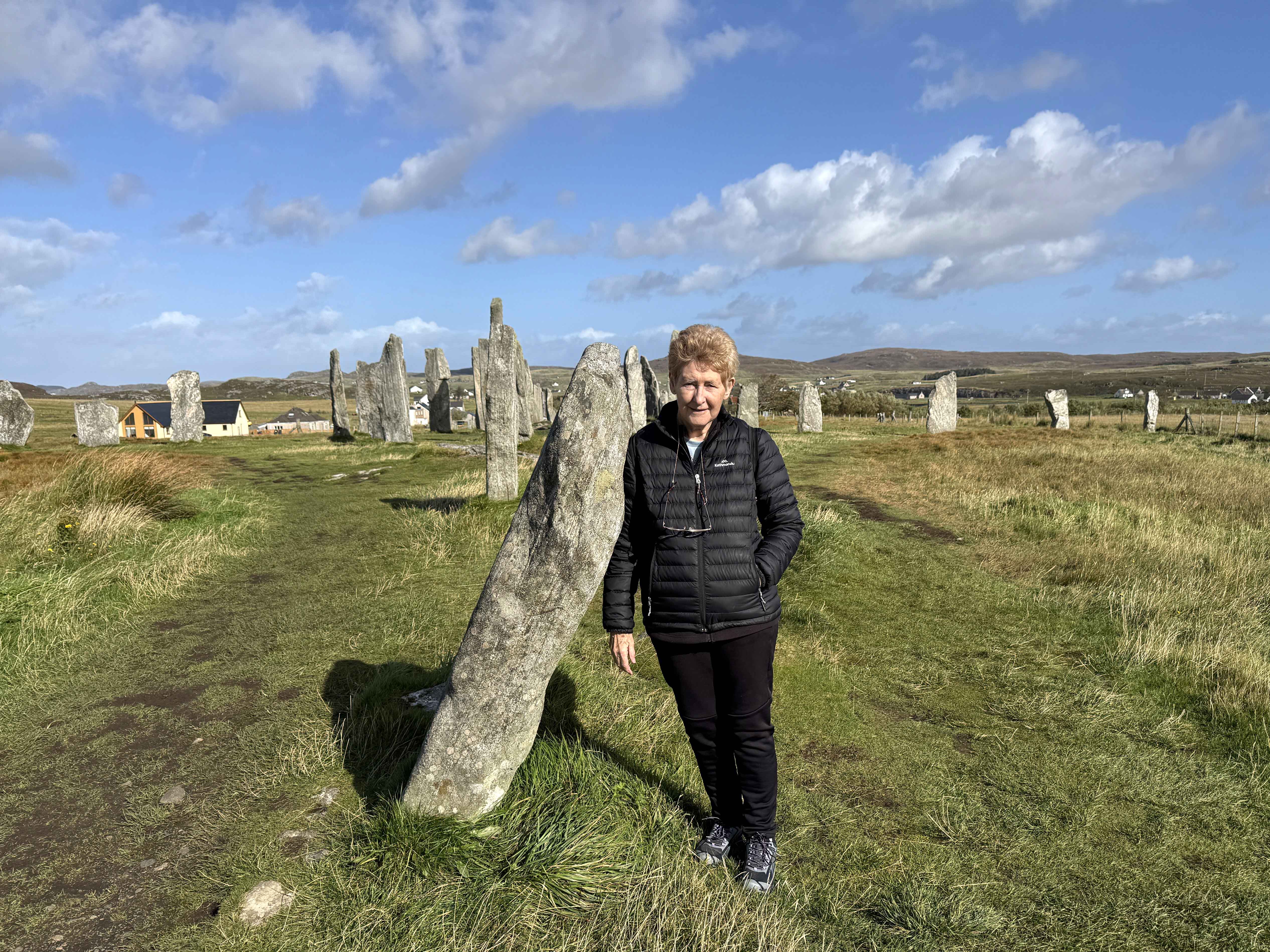
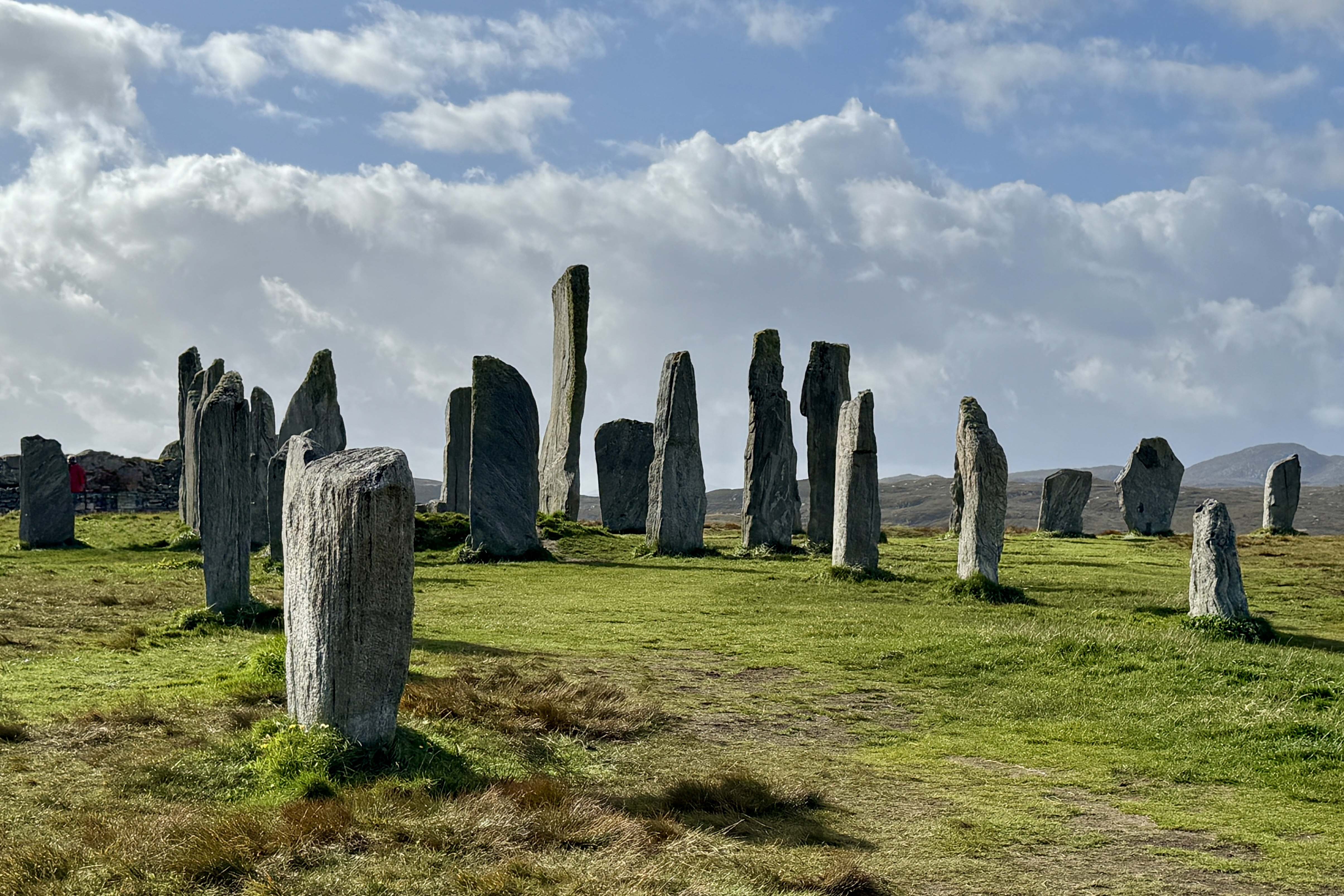
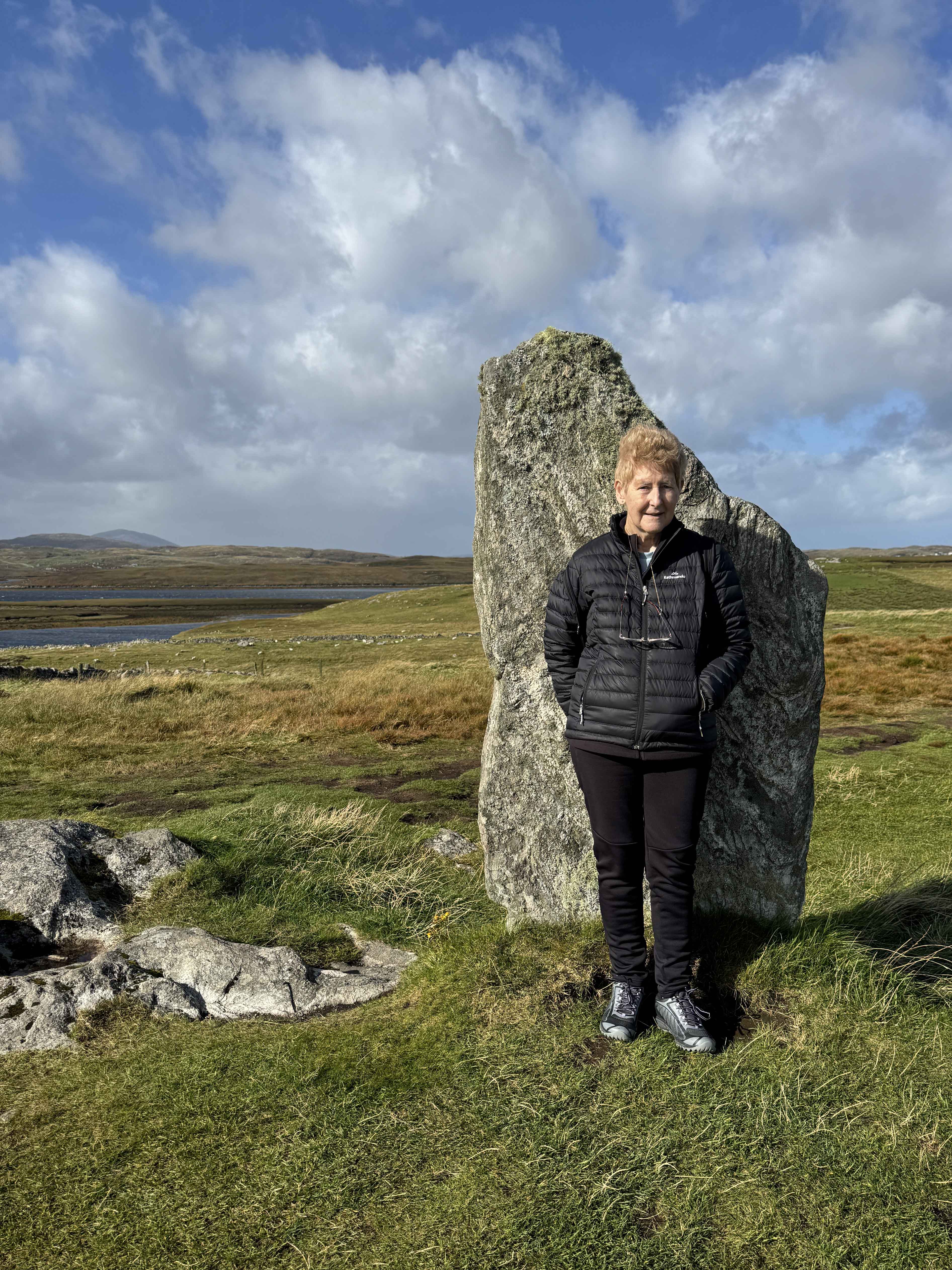
Calanais stones were erected about 5000 years ago, long before Stonehenge, their surfaces are rough and weathered by centuries of Atlantic wind and rain. They stand firm and brooding yet with a quiet authority. No one knows exactly why they were raised, maybe ritual, astronomy or ceremonial – but standing among the distant hills and lochs it’s easy to imagine the lives of the people who lived there and placed them carefully into the earth.
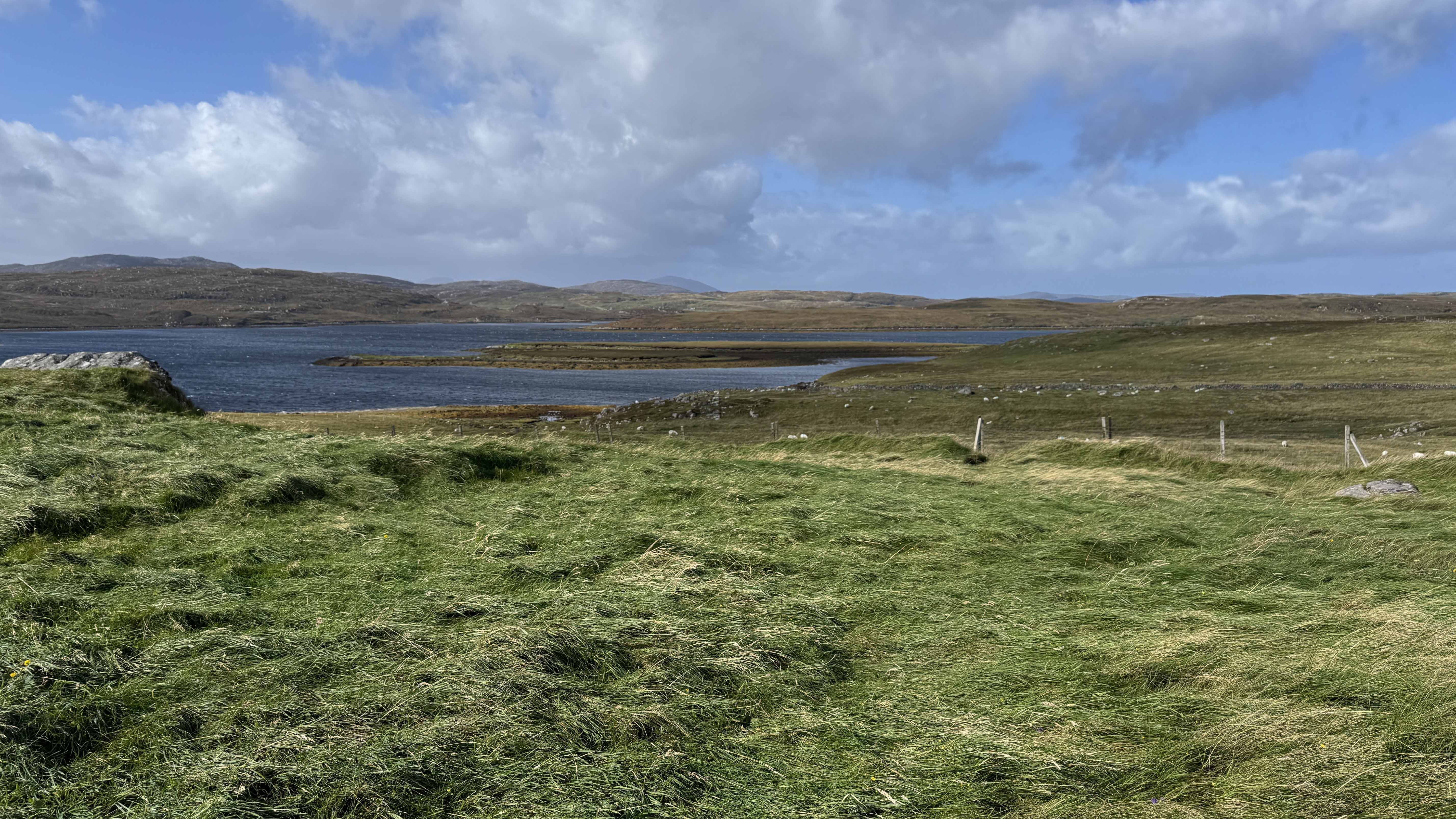
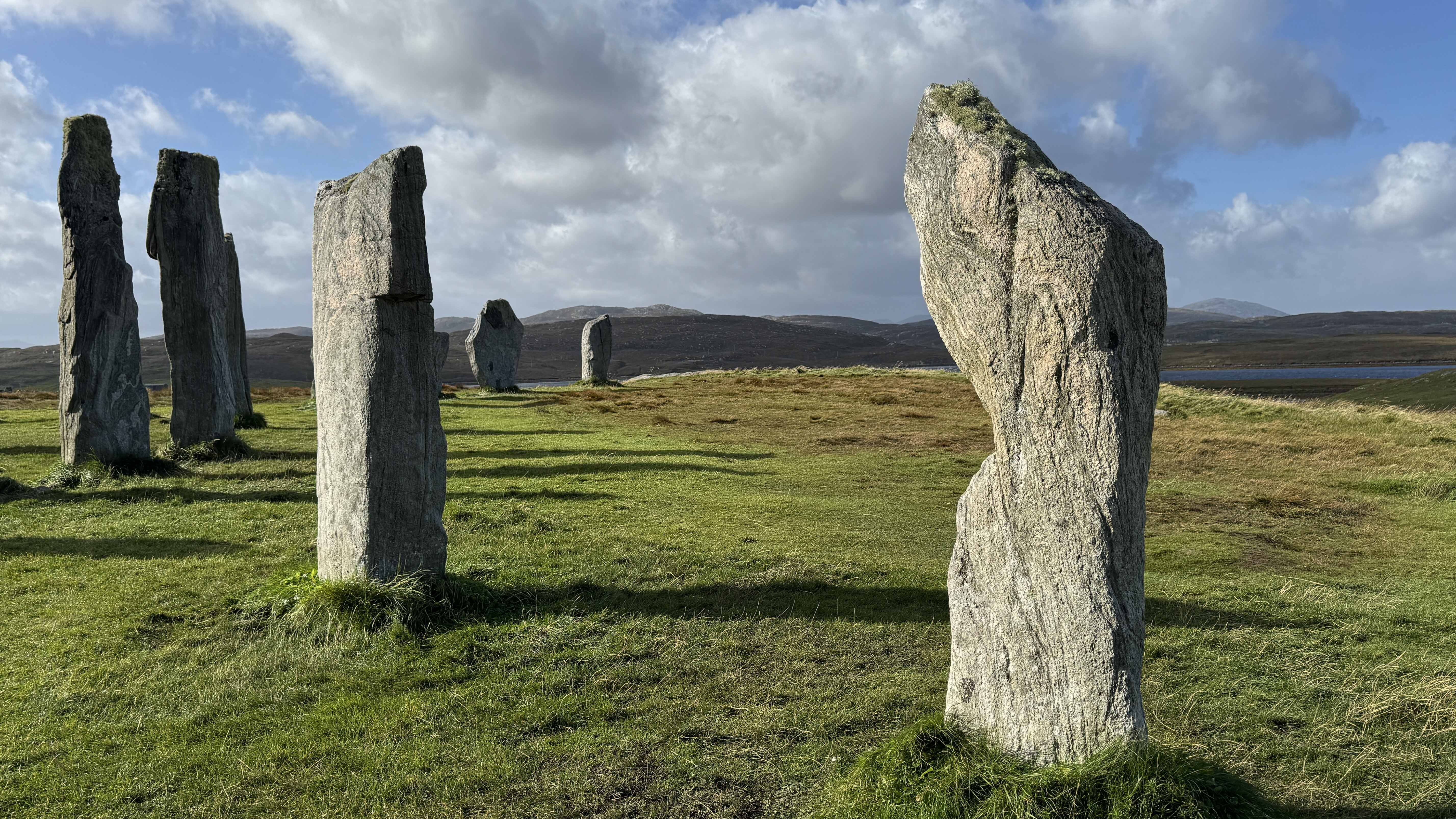
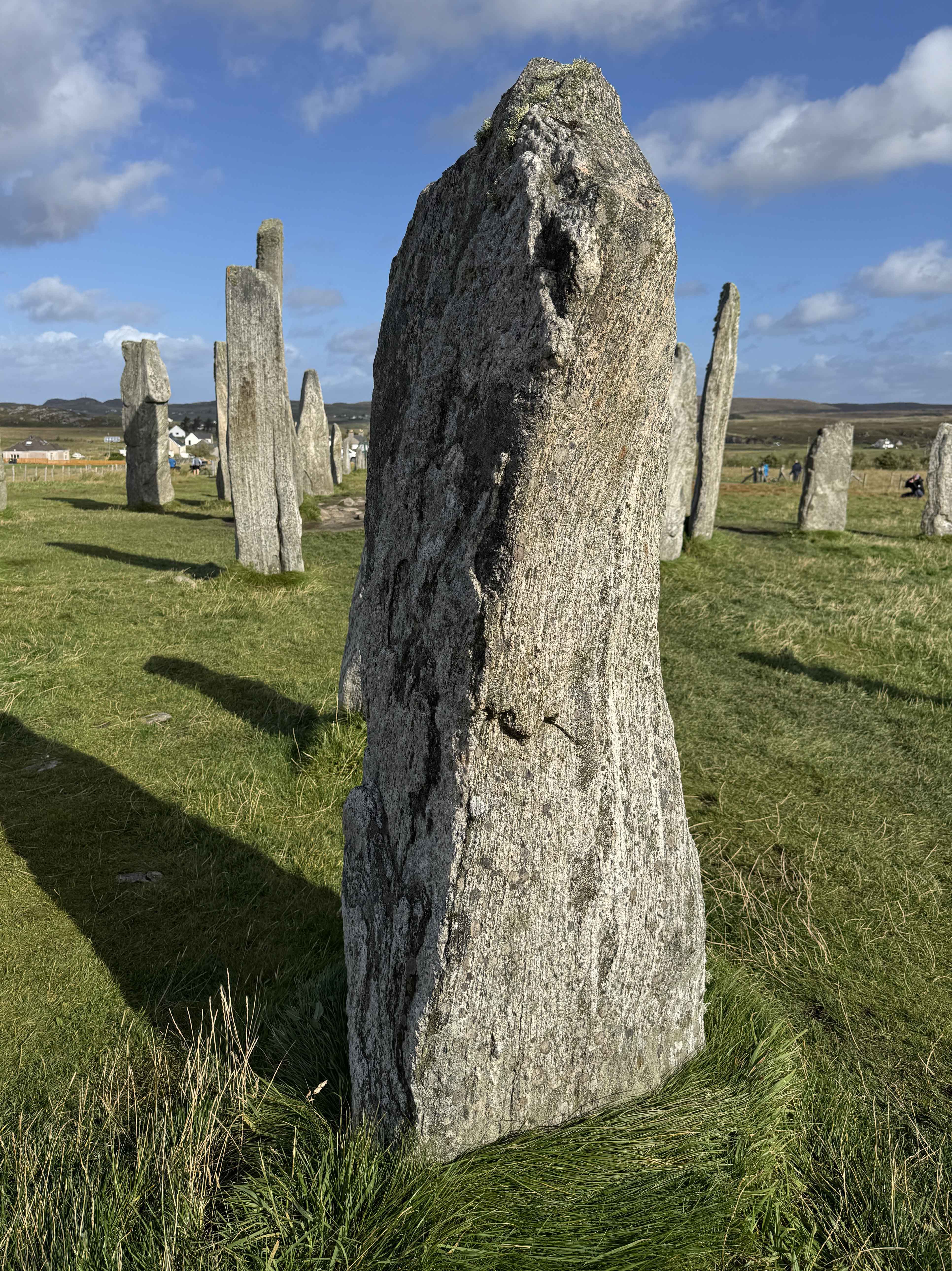
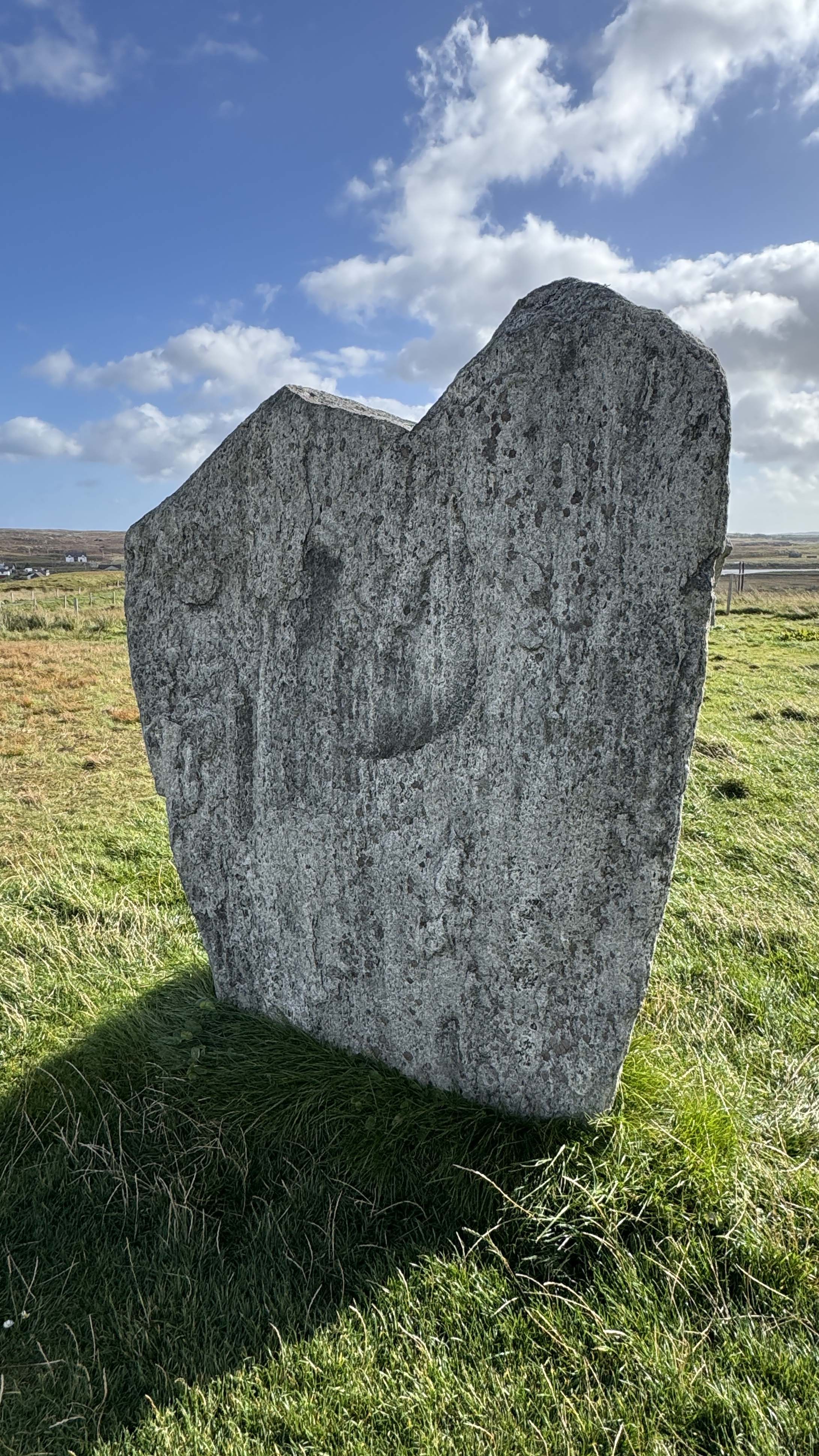
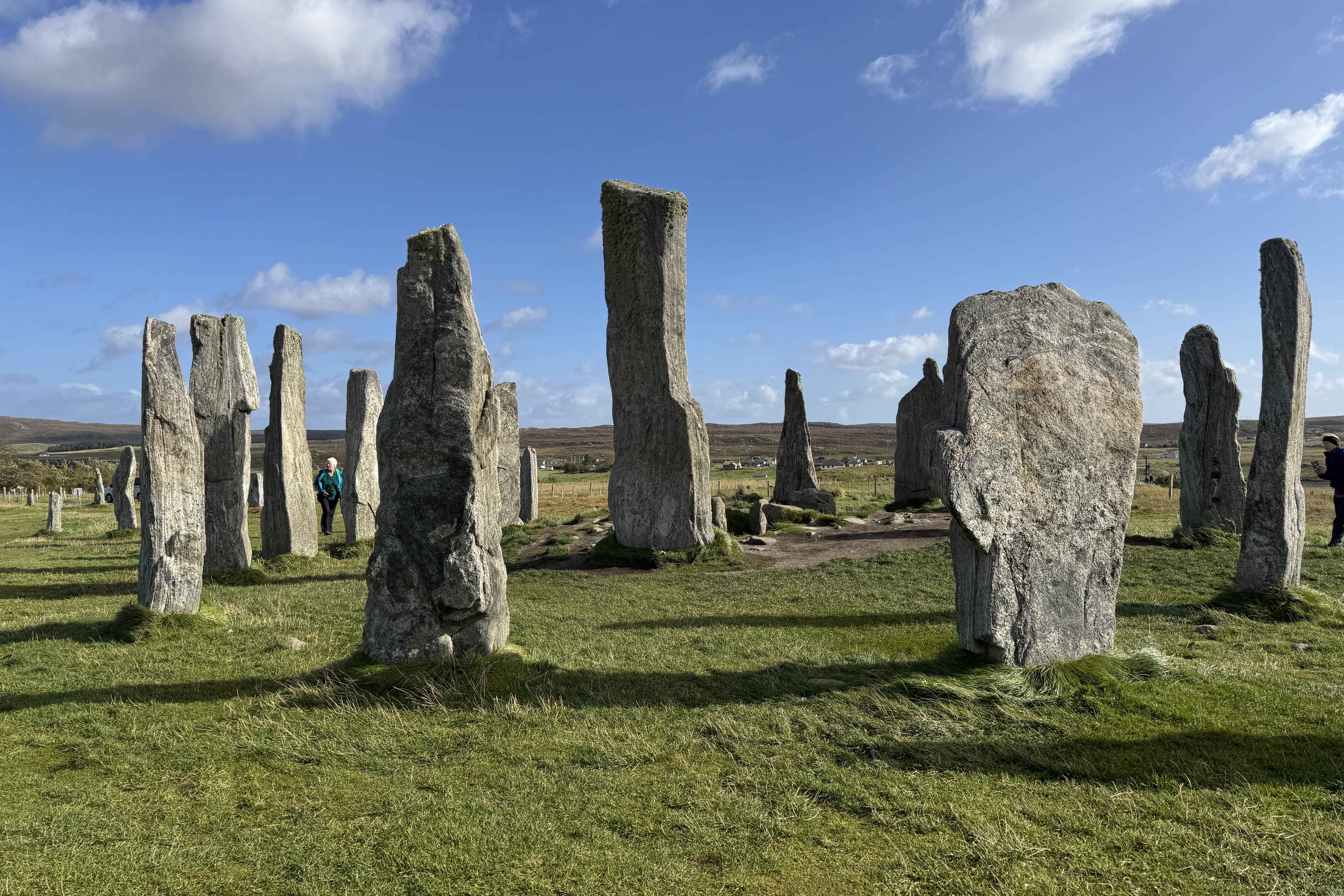
When you visit, you don’t just see the Calanais Stones, you feel them inside you, that deep sense of mystery which makes you want to return.
While standing among the stones it’s easy to forget that they are from the Late Neolithic period. The small communities in the area used local Lewisian Gneiss hauling the massive stones into position with a shared purpose.
This windswept moorland was once filled with people, then nature reclaimed it around 1500 BC. Peat built up around the stones partially burying them until many centuries later they were rediscovered and revealed.
Archeology has given us facts and dates, but it has also given us a reminder that the Callanish Stone Circle was shaped by human hands and when I stood looking at the stones with a howling Atlantic wind blowing around my ears, I wasn’t just looking at history, I was looking at an echo of lives that were lived thousands of years ago.
 Dream of Travel - Live the Dream
Leave a comment