
Northern Ireland
The green grass, wildflowers and bogs of Northern Ireland hold many ancient secrets and I was anxious to see and experience as many of them as I possible could in my two weeks of exploration.
I was staying at Cookstown in a lovely B&B called The Manorview. My hostess was friendly, served a delicious breakfast and my room was delightful, spacious and beautifully decorated.
But back to my search for ancient sites. I’m not sure where I first read about Beaghmore Stone Circles but they definitely ended up high on my “to visit” list.

I’d had a busy day so it was getting late when I arrived but much to my delight the place was deserted. My pet hate while travelling is having to fight crowds, they totally remove any mystic atmosphere, and tourists have a nasty habit of standing in front of my camera. That I might form part of the crowds in some instances is beside the point.
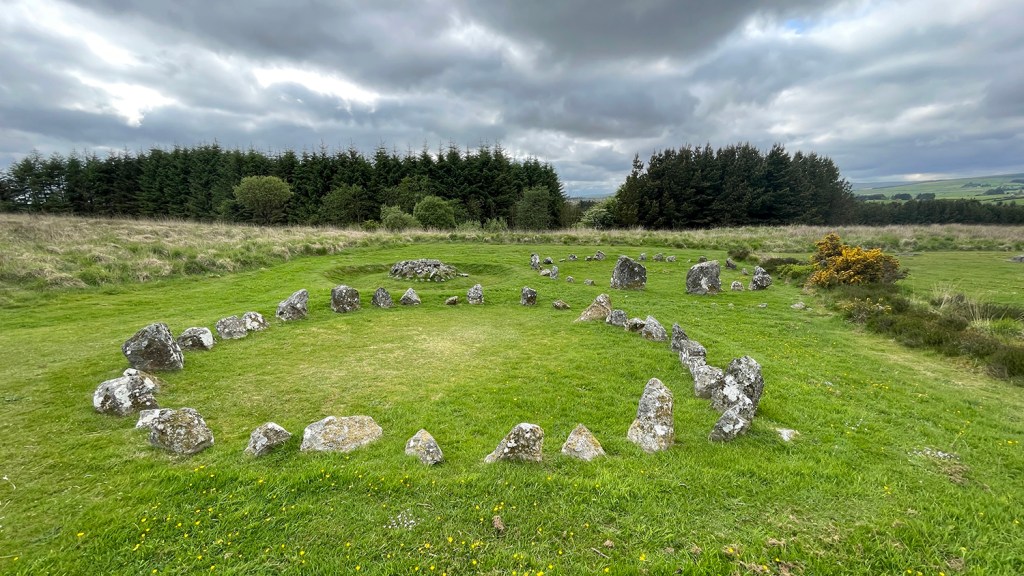
Beaghmore means “big place of birch trees” and before being cleared by Neolithic farmers was once dense woodland. Flint tools and hearths found at the site have been carbon dated to 2900-2600 BC suggesting that these farmers occupied the area throughout the Bronze Age.
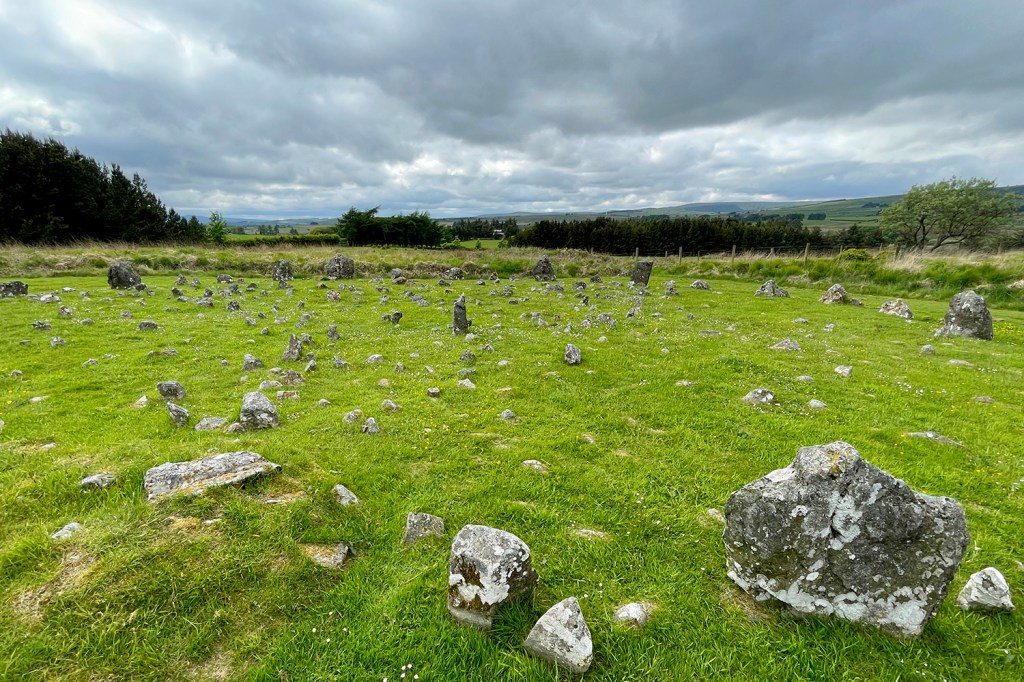
At first sight the stones didn’t look very impressive, just a few rocks placed in a green field and nothing as majestic as Stonehenge. But while I was walking around the seven circles of different sizes, twelve cairns and ten rows of stones the mystery and silence of the place crept into my soul.
If I closed my eyes I could see the Bronze Age people arriving for their ancient rituals. Maybe grieving at the loss of a much-loved member of their family.
Three of the stone rows point to sunrise at the solstice indicating the stones were arranged with knowledge of the skies and seasons. All but one of the stone circles are in pairs each with a cairn positioned in between. The stone rows are also situated in pairs and radiate from the circles.
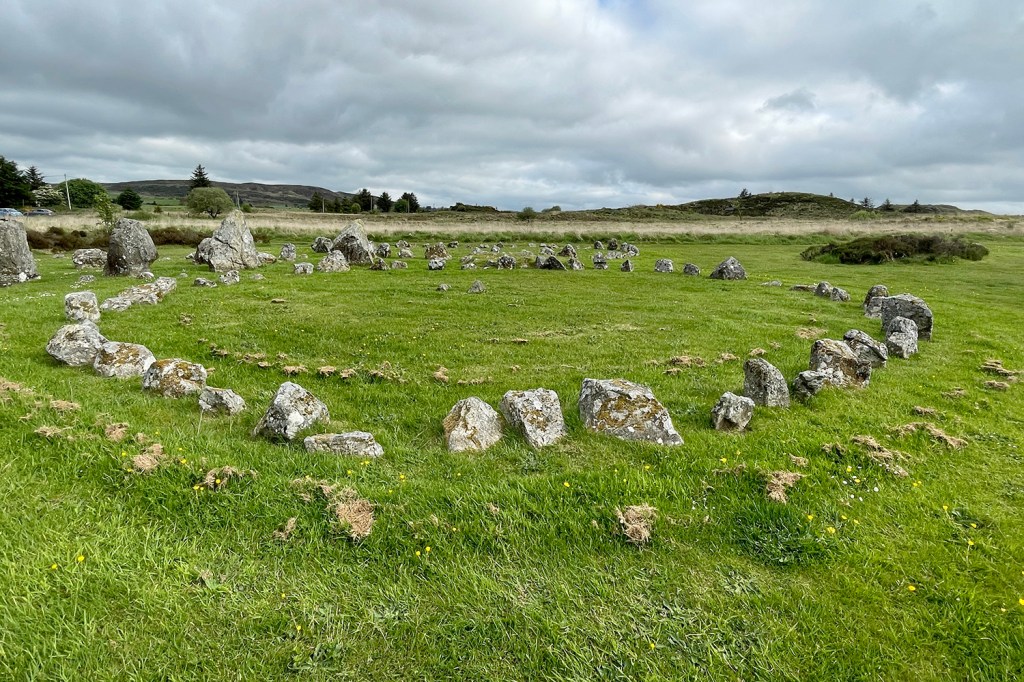

The site was discovered in the late 1930s when 1269 stones were uncovered and partially excavated. It was eventually taken into state care but in 1965 was excavated again when the flint tools and hearths were discovered. Four of the cairns were found to contain cremated human remains.
I wandered for an hour or so thoroughly enjoying the peace and my imaginings, then crossed the road to where a track and boardwalk were tempting me to explore further, however it was getting late and I had no idea where it would lead so I reluctantly left the stones to their ghosts and made my way back to the car. Maybe if it hadn’t seemed so isolated I might have waited for the sunset but I’m very much aware that I am a mature female traveller and tend not to tempt fate by wandering alone at night.
It was a quiet end to my day and I really appreciated the peace and, of course, the history. If you’re in the area and love ancient places it’s definitely worth a visit.

*****
 Dream of Travel - Live the Dream
Leave a comment