
“What’s that down there? There, on the right.”
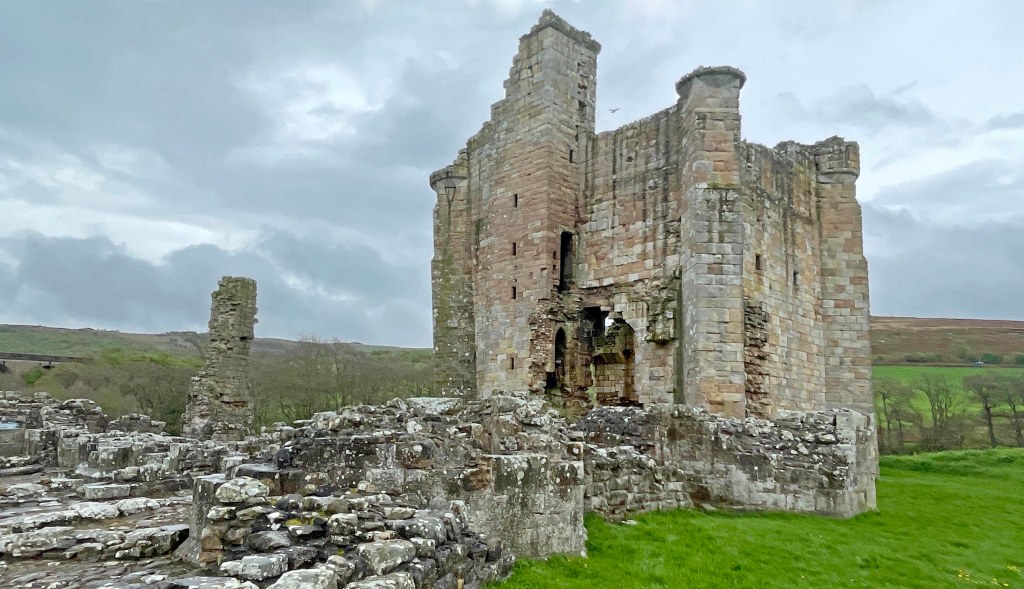
Our necks were on a swivel as all three of us craned our necks to see. Down in the valley we could see some grey ruins standing out against the green fields.
Two replies were in unison, “I don’t know, it’s not on Google Maps!” Thankfully our driver returned his eyes to the road and in the space of half a breath our car turned into the lane and we were, again, heading for places unplanned.
We were making our way south through Northumbria towards Corbridge where we planned to stay a night before driving to the Lake District.
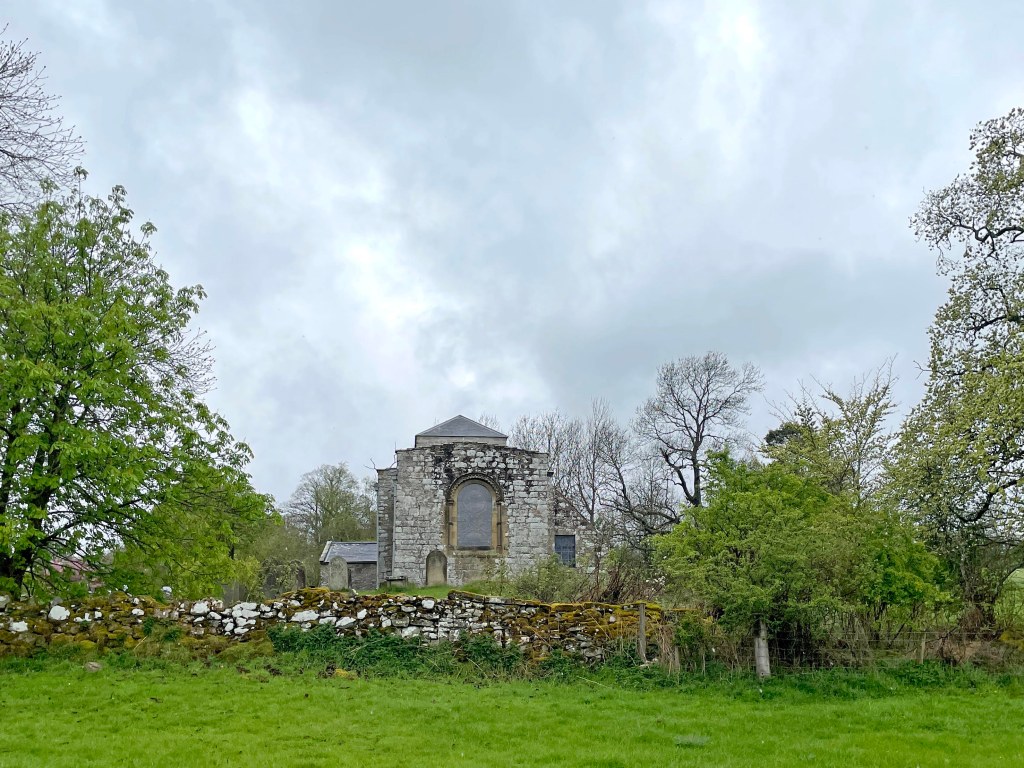
After making a sharp right turn and leaving the main road we headed straight for the ruins to discover Edlingham Castle and St John the Baptist Church set behind a moss-covered stone wall.
Trivia: Edlingham, means the “home of Eadwulf” in Anglo-Saxon and the recorded history goes back to 737AD when King Coewulf gave Edlingham and 3 other Northumbrian villages to Cuthbert.
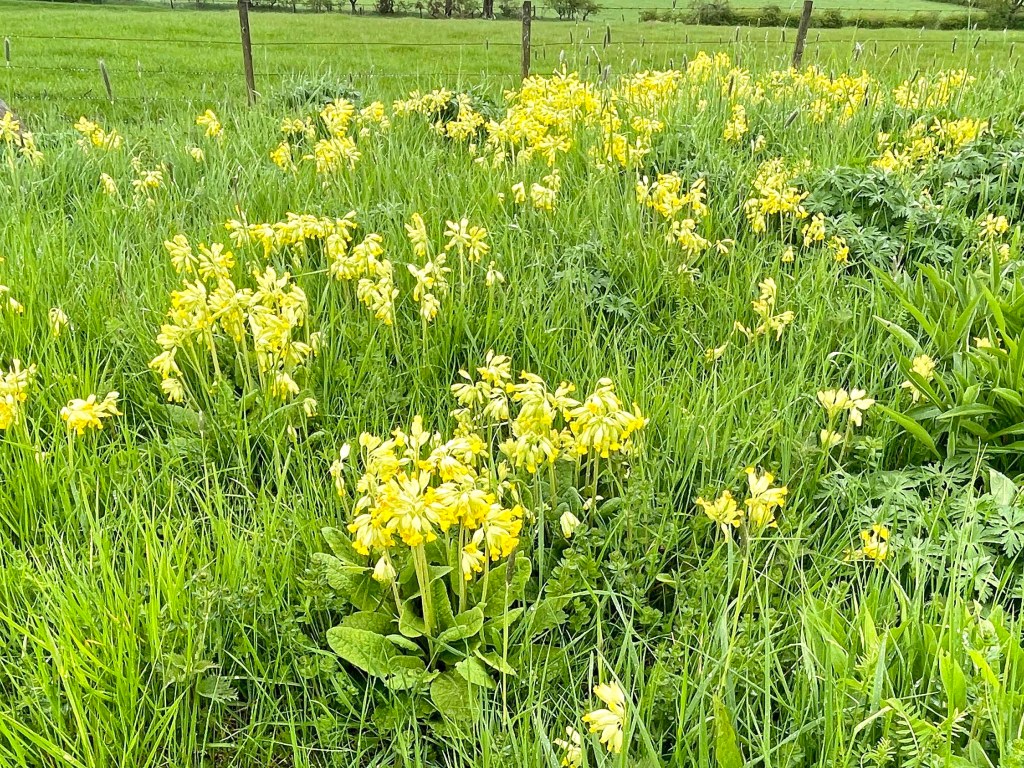
We plodded passed the church through the long, wet grass towards the ruins, however, I was totally distracted by the sight of a patch of yellow cowslips. I sank down to look more closely, tears forming as I remembered, over 65 years ago, searching fields near my home in County Durham for the elusive blooms. I found that over the next few weeks they seemed a lot easier to find than they did back then!


But I had some ruins to explore so I left the memories of my childhood and rushed to catch up.
Edlingham Castle is actually a fortified manor house built by John of Edlingham in the 12th Century.
It was an impressive sight with much of it still standing despite a worrying crack running from top to the ground. The whole column was held up by cables and although I presumed it was safe from collapse I still kept clear – just in case. Foundations, part of the walls, gatehouse and courtyard, dated from the 16thC are still very visible.
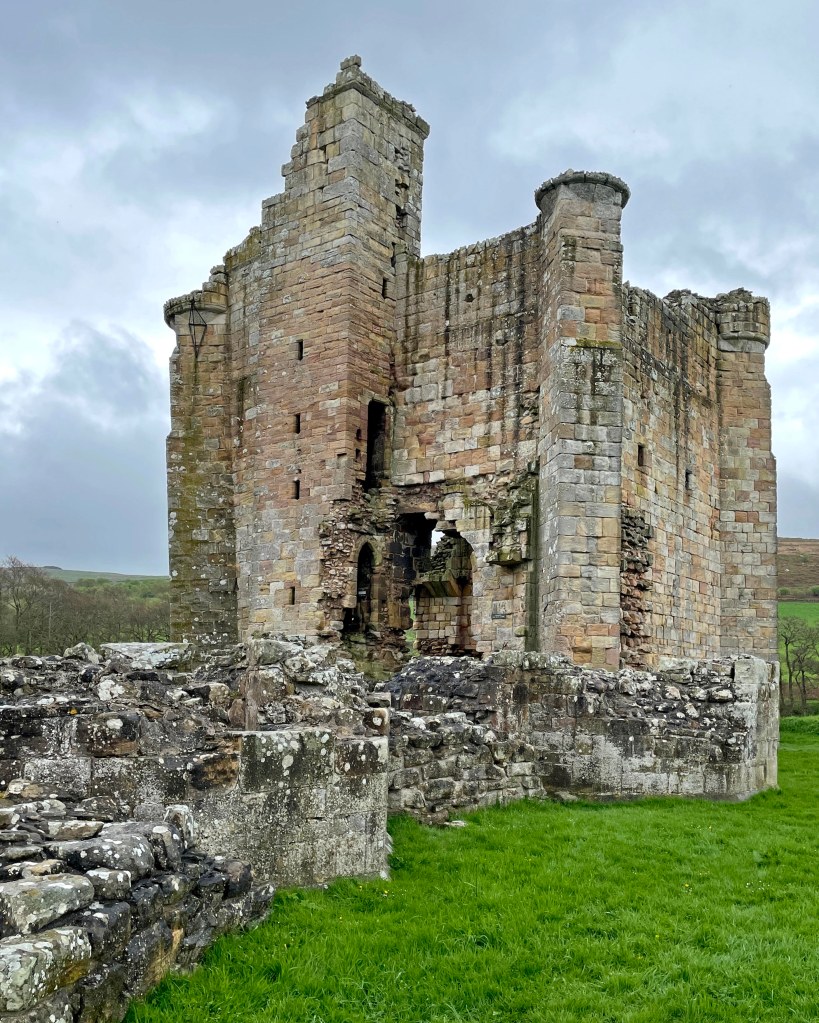
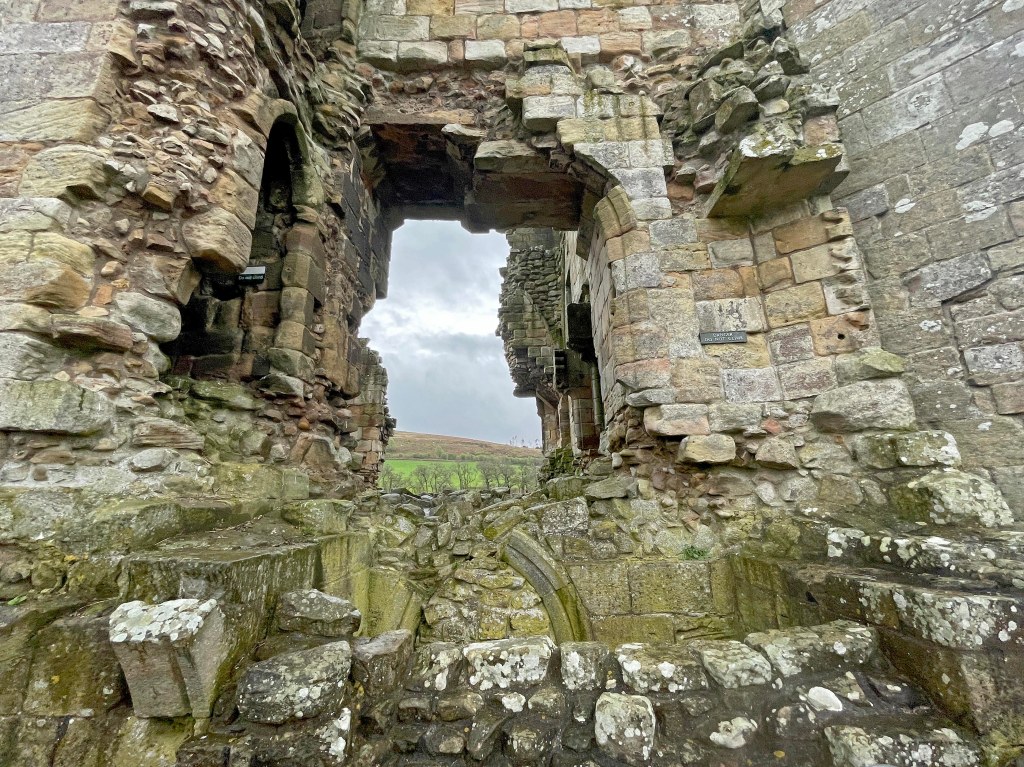
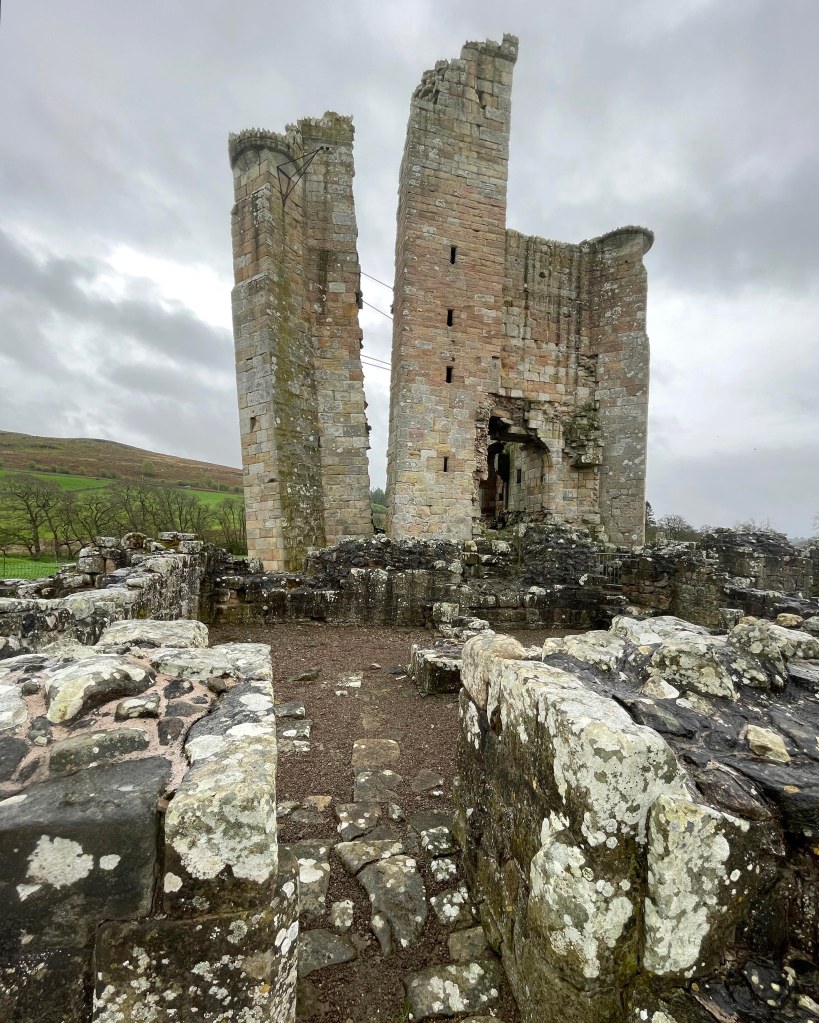
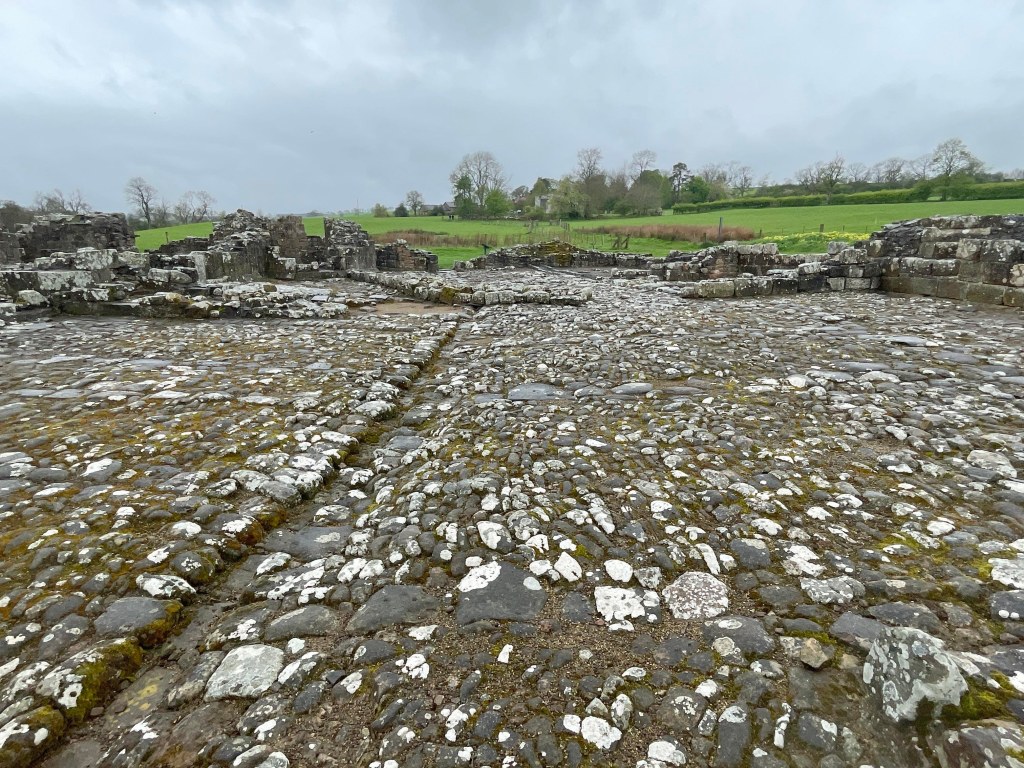
By 1650 the castle had been abandoned and the theft of stone left the castle in ruins. After some happy wandering around the castle we headed towards the church.
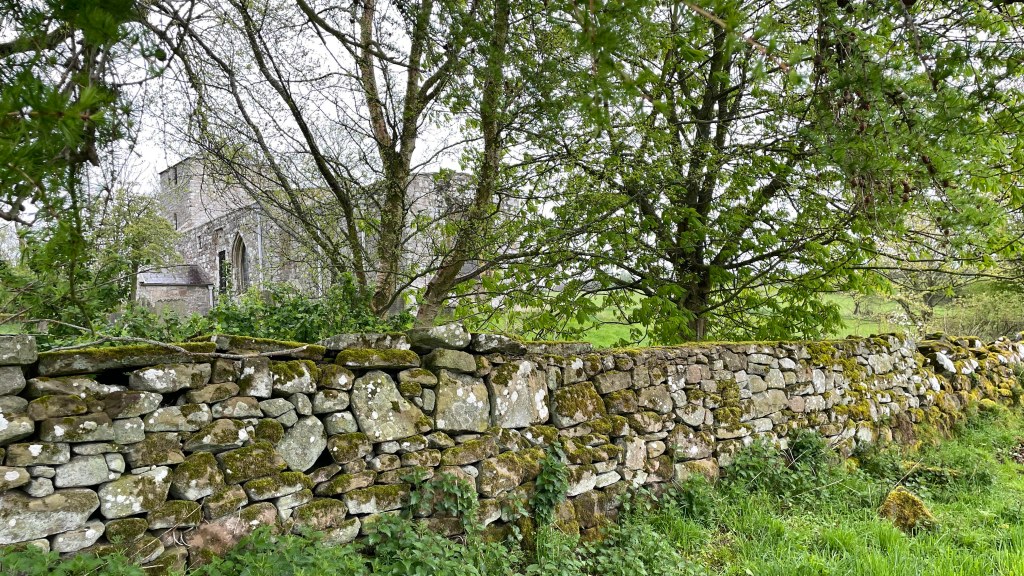
Hidden behind the stone wall and trees my travelling companions didn’t much like the atmosphere of the church so they declined to enter, however, after visiting so many ruins over the years I opened the door and entered.
Built by John de Edlingham and dated from the 11th and 12th Century the church appears to still be in use as the noticeboard gave details of services. I have to admit the grey, stone walls exuded a definite atmosphere.
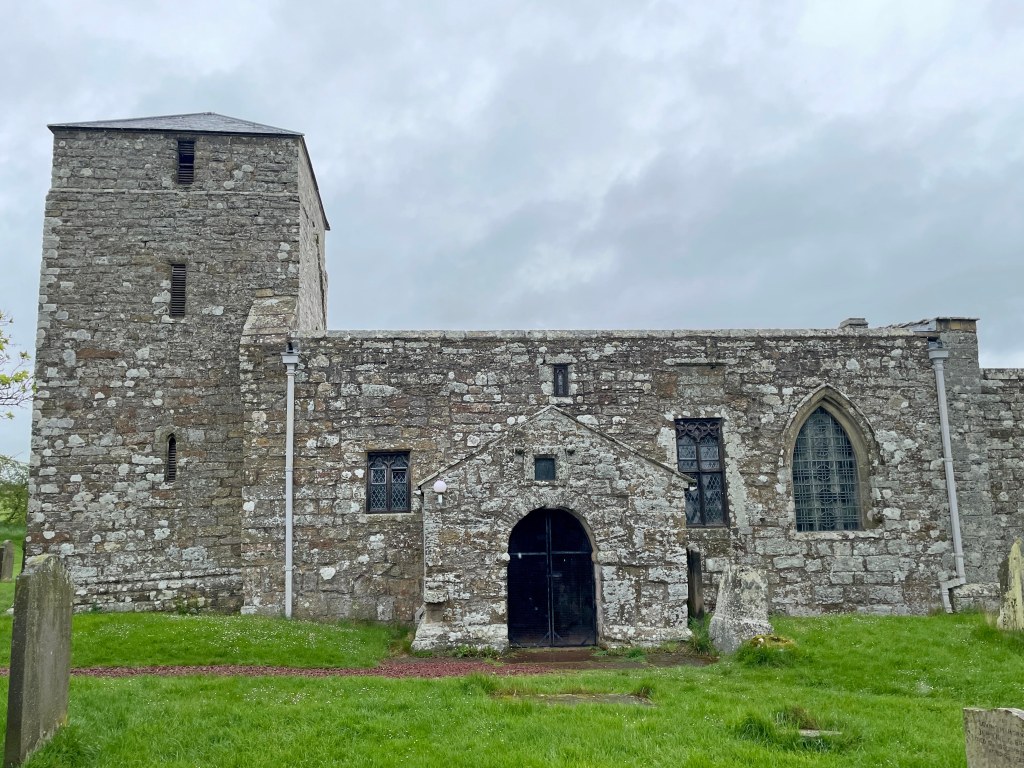
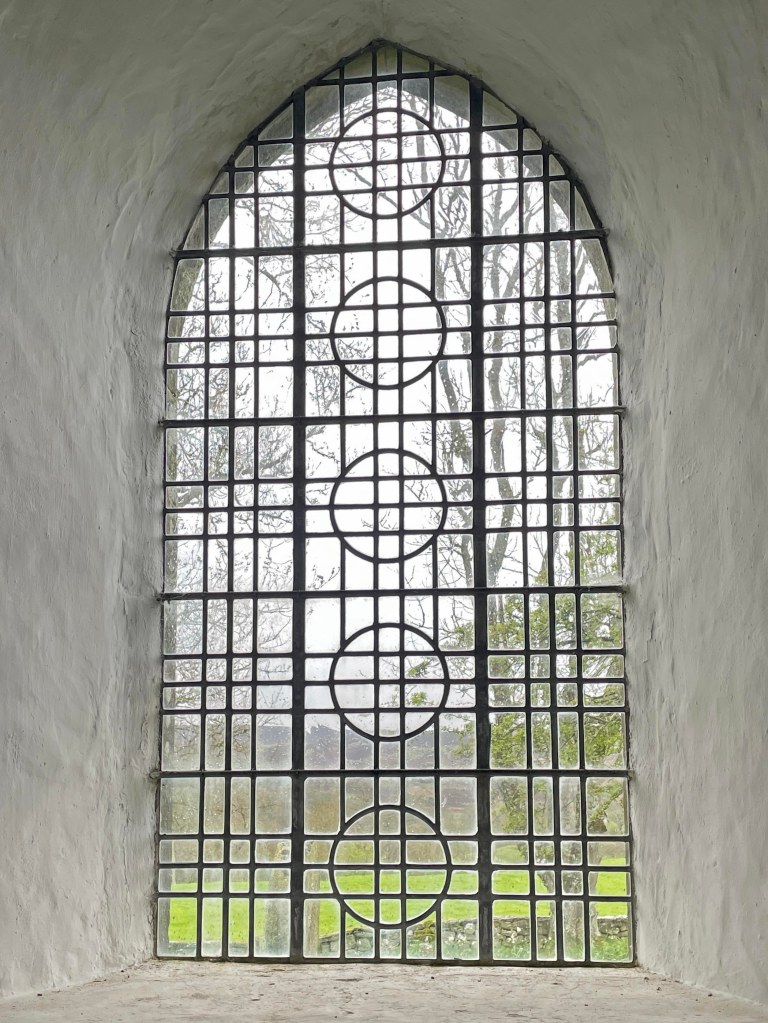
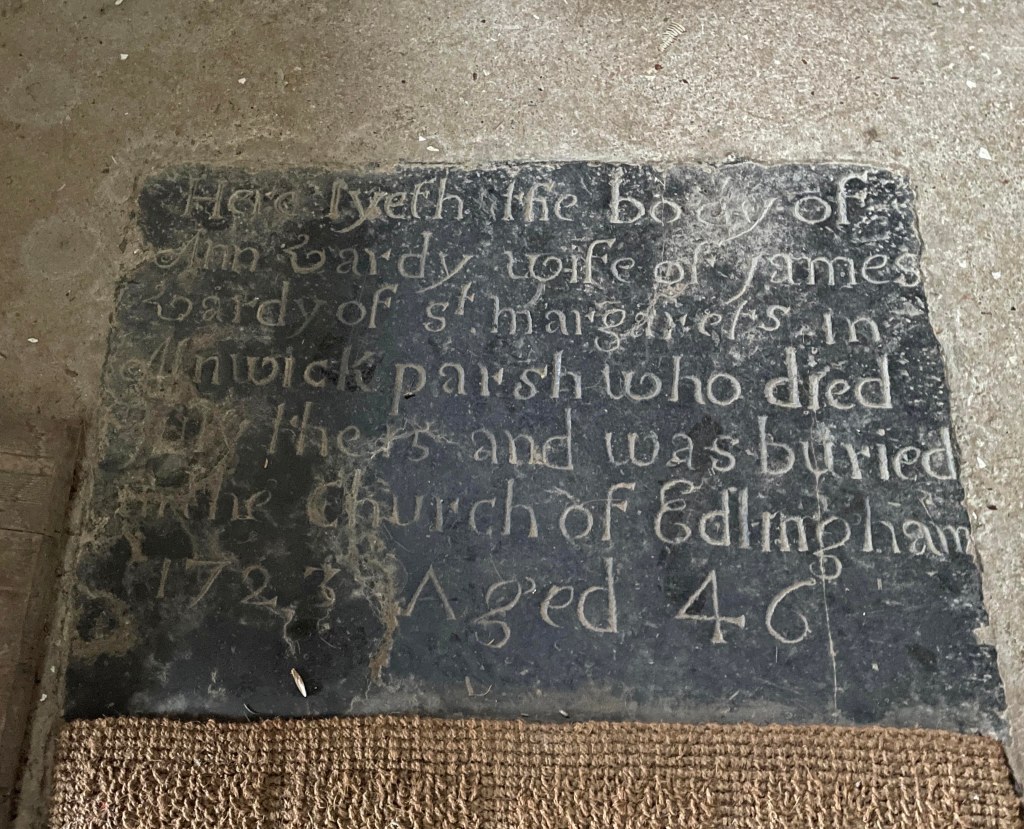
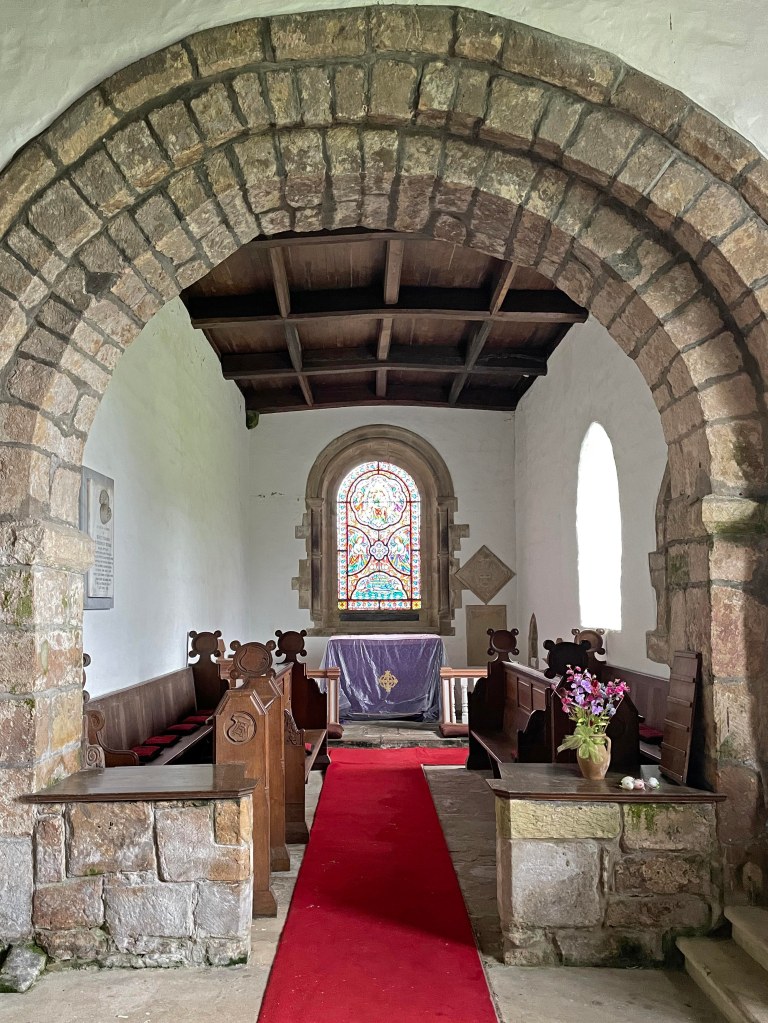
Inside the silence was heavy but I love ancient buildings and thrive on the atmosphere generated by their hundreds of years of life. I found it to be a wonderful example of a medieval church, mostly Norman, and the fact that it is still in use is tantamount to the building skills of the people of that time. I left the site happy that we’d taken the time to explore and really gladdened by the sight of so many cowslips – I could only imagine the joy I would’ve felt if I’d found them when I’d been 10 years old!
 Dream of Travel - Live the Dream
Leave a comment