
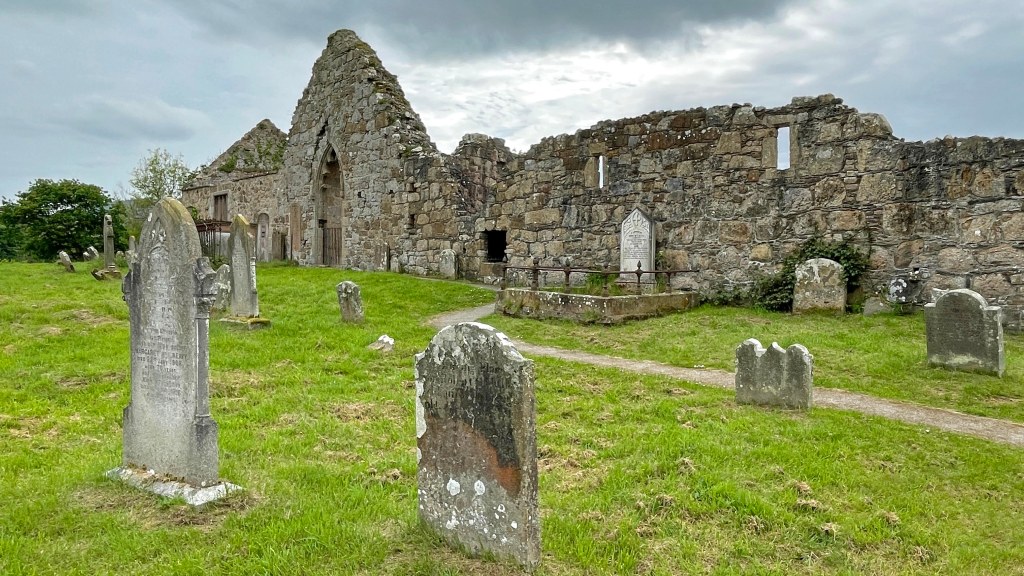
One of the advantages of driving yourself is if you see a sign that looks interesting, you can stop, turn and explore. I did this on several occasions while in Northern Ireland, the first being Bonamargy Friary. Never heard of it? No? Well neither had I! But it has a long and somewhat troubled history and, despite the tiny carpark, proved to be well worthy of a stop.
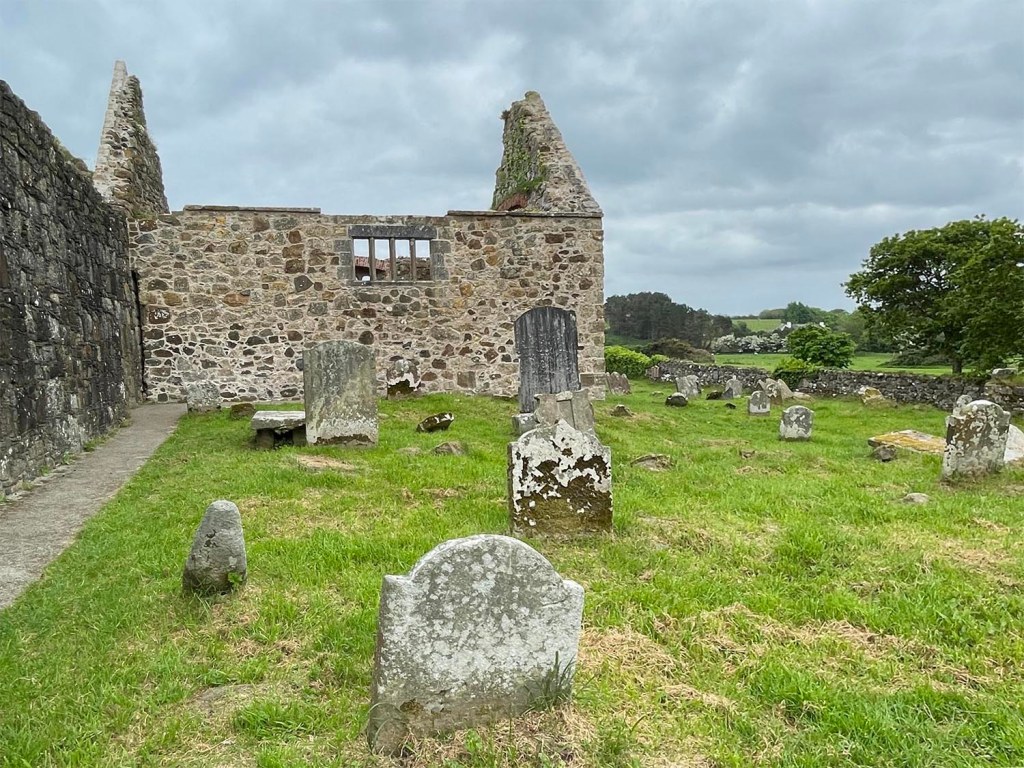
The path to the ruined gatehouse was lined with ancient trees. Grey clouds blocked the sun creating a dull, eerie atmosphere. And that was before I knew of the Friary’s haunted history. As I made my way through the ruined gatehouse to the church, I passed crooked and fallen gravestones, their inscriptions worn and barely decipherable.
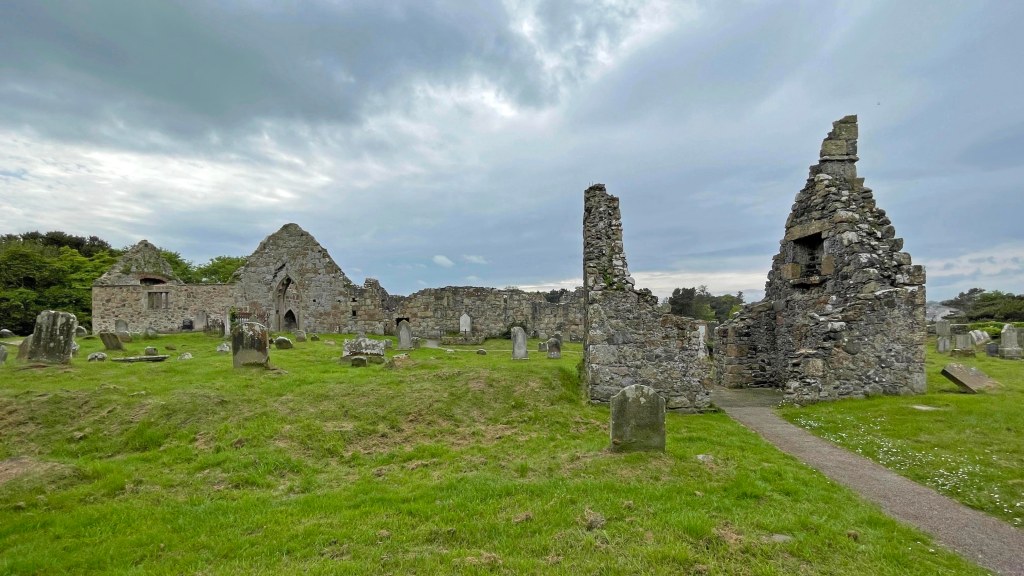
This small Franciscan Priory was built in 1485 by Rory MacQillan, chief of a very powerful family at that time.
Unfortunately for the MacQuillans, Sorley Boy MacDonnell defeated the them in battle when they fought for the possession of the Friary in the mid 16th century.
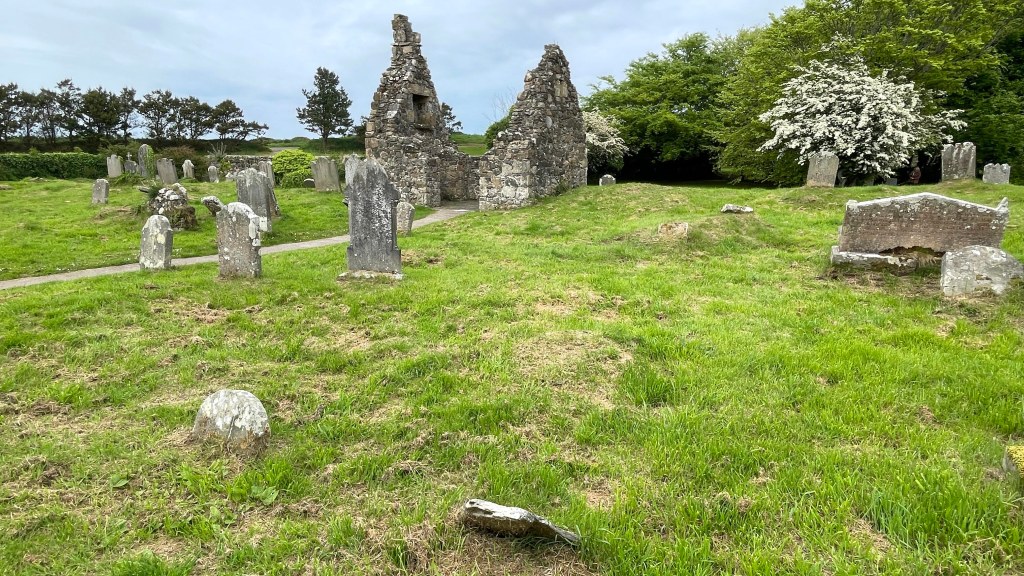
It is said that sealed burial vault holds the remains of Sorley Boy MacDonnell as well as other Earls of Antrim and chieftains of the MacDonnell clan, however this is speculation only as the vault was built in 1621, many years after his death.
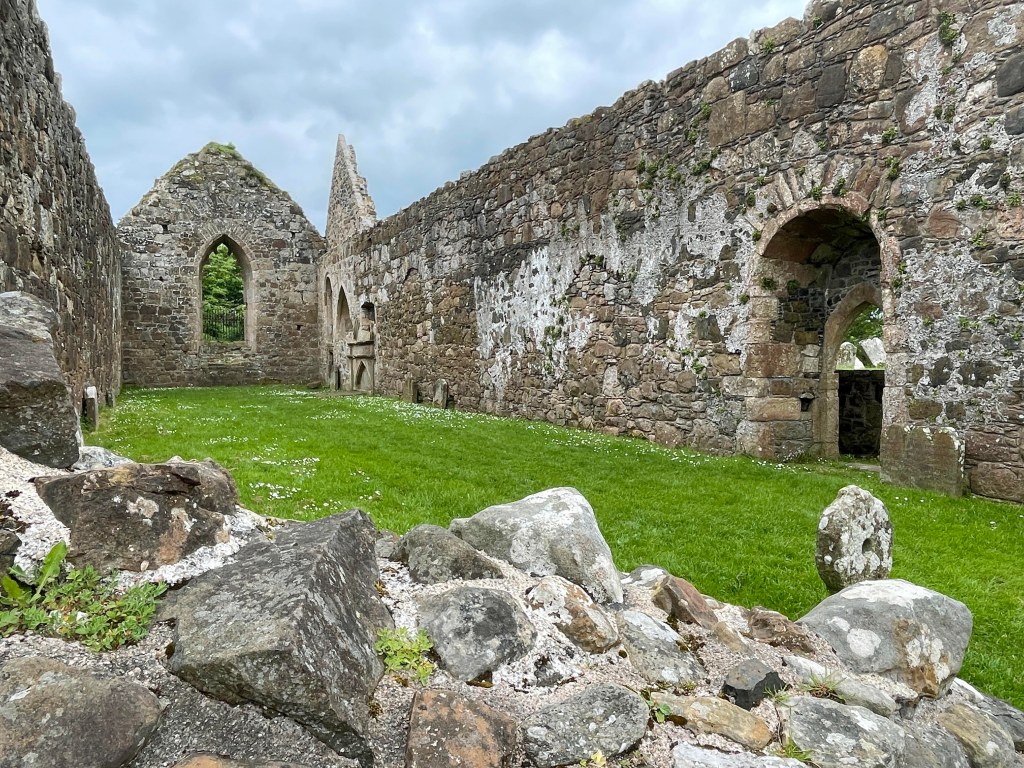
The church itself was in use until the mid 18th Century when the west gable collapsed in a storm. The cemetery, however, has been used continually until modern times and includes graves from the first and second World Wars.
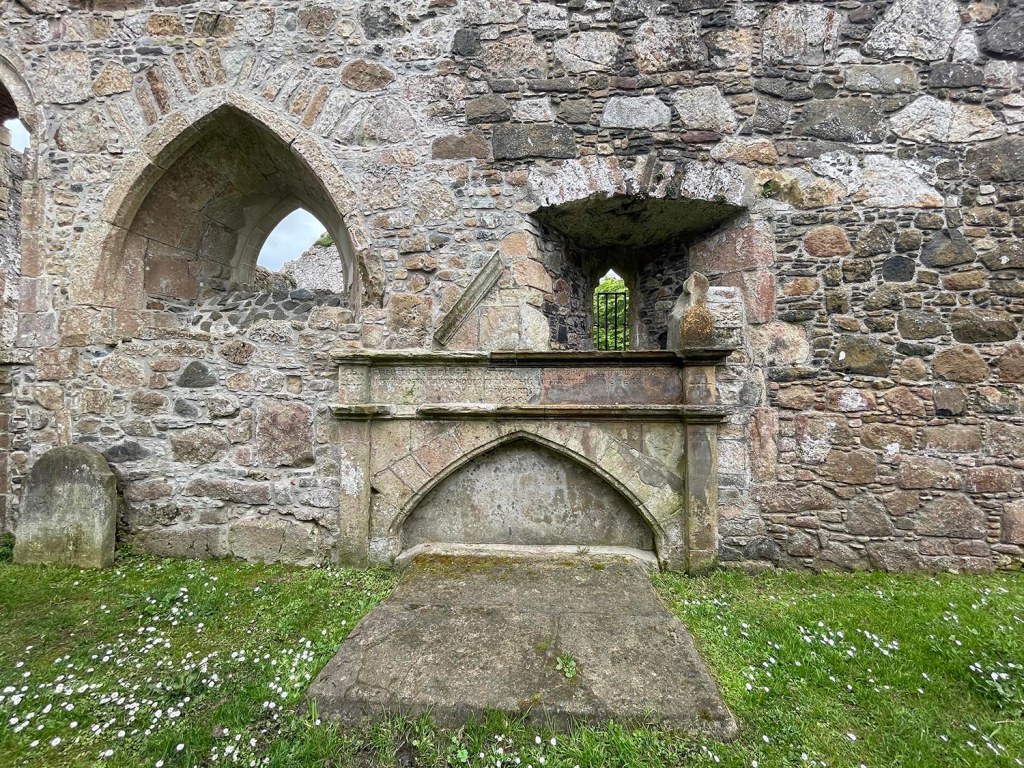
On the south wall of the church there is an impressive tomb of another prominent family, the McNaghtens
But the most haunting history of Bonamargy is the story of the 17th Century Black Nun. Julia MacQuillan lived alone in the ruins after they were abandoned in 1641 and was said to be able to tell the future. She was murdered on the 13th step of the stairs leading to an upper floor and legend tells that ill luck will befall those who place their foot on that step. Other stories tell that she fell from an upper floor window.
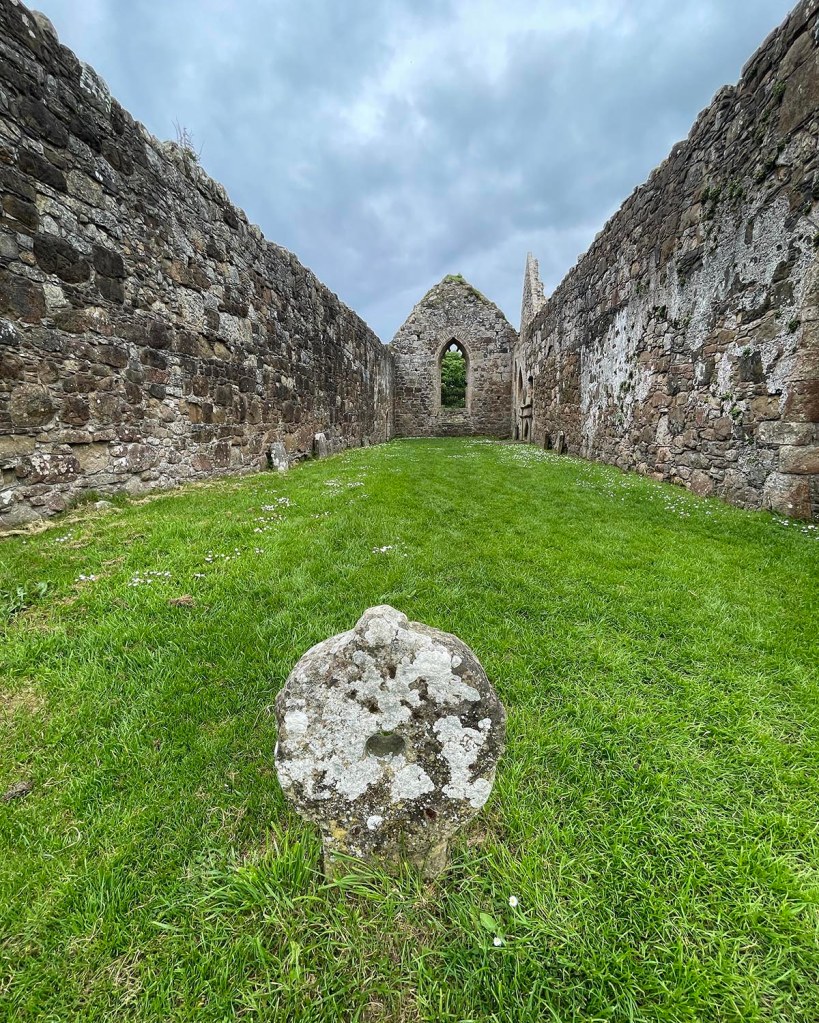
As a sign of her humility she had asked to buried at the entrance to the chapel so she could be stepped on by those who visited. Her grave is marked by an unusual round headstone with a hole in the centre and she is said to haunt the steps on which she died to this day, not somewhere to visit alone on a dark night unless ancient, haunted churches have a macabre appeal to you!
Bonamargy Friary’s history is one of conflict and battle, legends of murder and treasures lost and of medieval manuscripts found, one of which was sold to the British Museum in 1887.
My stop at Bonamargy Friary was interesting and unexpected and proved to be much more than a quick walk around some ancient ruins.
 Dream of Travel - Live the Dream
Leave a comment